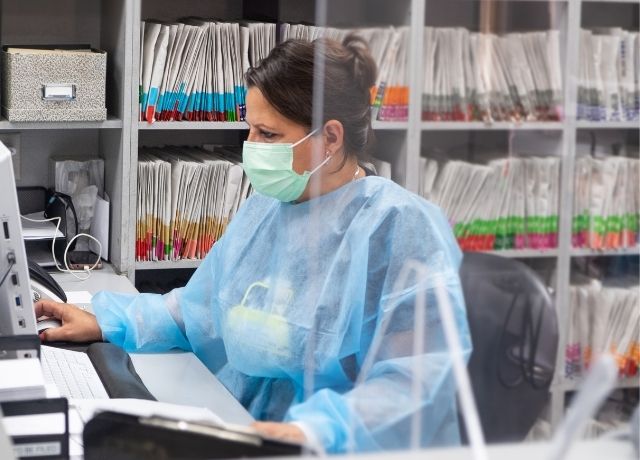
Health care data breaches and cyber events cost an estimated $13 billion and increased by 55% in 2020, according to a new report that found it takes an average of 236 days for health care firms to recover from breaches.
Cloud security firm Bitglass analyzed data from the U.S. Department of Health and Human Services to find that hacking and IT incidents were the top sources of compromise and lost records last year, causing over 67% of all breaches. The number of data breaches jumped to 599 from 386 in 2019, and the average cost per breached record rose to $499—up from $429.
According to the report, hacking and IT incidents have increased significantly since 2018, causing 91.2% of all breached health care records. During the same period, loss/theft and unauthorized disclosure have remained steady as less-frequent occurrences.
“In 2014, lost and stolen devices were the leading causes of security breaches in health care, while hacking and IT incidents were the least common causes,” according to Bitglass. “Today, things have essentially inverted. Each year since 2015, hacking and IT incidents have been exposing more records than any other breach type. These results demonstrate the heightened impact of cybersecurity breaches, the shifting strategies of malicious actors and how health care organizations are grappling with cybersecurity.”
California led the nation in breaches at 49 health care cyber breaches, followed by Texas at 43, New York at 39, and Pennsylvania and Florida at 38. Many of the health care cyber breaches occurring in 2020 were a byproduct of the Blackbaud ransomware attack.
The Department of Health and Human Services (HHS) Office for Civil Rights maintains a tally of reported health care breaches, with 47 new events occurring since Jan. 1. The 32 events reported in January 2021 were well below the 62 reported in December 2020, according to an analysis conducted by the HIPAA Journal. One of those January breaches occurred at the Florida Healthy Kids Corporation due to unpatched software vulnerabilities at a third-party IT vendor. The breach is estimated to have occurred over a seven-year period, involving names, birthdates, email addresses, telephone numbers, addresses, Social Security numbers, insurance information and significant financial information.
Cybersecurity for hospitals and health care organizations remained a key theme of 2020, as providers struggled to keep pace with both the COVID-19 pandemic and cyber threats.
The HHS numbers do not necessarily capture the full picture of ransomware’s impact on hospitals around the world and, in the last quarter of 2020, the threat only worsened, according to a report from Check Point. The trend is not isolated to the United States—two French hospitals recently fell victim to ransomware.
Since November 2020, Check Point observed a 45% increase in attacks against health care organizations around the world compared to a 22% increase against other sectors. While attacks also include botnets, DDoS and other hacks, ransomware is showing the biggest increase, according to the firm, with the Ryuk ransomware strain particularly prevalent.
The major motivation for threat actors with these attacks is financial. They are looking for large amounts of money, and fast.
“It seems that these attacks have paid off very well for the criminals behind them over the past year, and this success has made them hungry for more,” according to Check Point. “It is also important to note that unlike common ransomware attacks—which are widely distributed via massive spam campaigns and exploit kits—the attacks against hospitals and health care organizations using the Ryuk variant are specifically tailored and targeted.”
California’s Leader in Insurance and Risk Management
As one of the fastest-growing agencies in California, GDI Insurance Agency, Inc. is able to provide its clients with the latest and greatest of what the insurance industry has to offer and much, much more. The GDI team has developed an “insurance cost reduction” quoting plan, that provides you with the best coverage at the best rate!
We are headquartered in Turlock, CA, with locations across the heart of California’s Central Valley, Northern California and beyond to provide a local feel to the solutions and services we provide our clients. We pride ourselves on exceeding our client’s expectations in every interaction to make sure that our client’s know how much we value and appreciate their business.
Shoplifting can become a costly problem for any retailer. According to the National Association for Shoplifting Prevention, over $35 million worth of merchandise gets stolen from retailers each day. Furthermore, the latest data from the National Retail Federation provides that shoplifting is the leading cause of inventory shrinkage among retail businesses—contributing to 39% of shrinkage concerns. With these numbers in mind, your business can’t afford to ignore the risk of shoplifting. Fortunately, many shoplifting incidents can be deterred by implementing a shoplifting prevention program. Review this guide for an outline of key elements to include in your program. Contact GDI Insurance Agency, Inc. today for your retail insurance quote 209-634-2929.
Start With a Smart Store Layout for Shoplifting Prevention
First, it’s important to ensure that the physical layout of your store dissuades potential shoplifters. That being said, follow these layout best practices:
Limit the number of entrances and exits at the store. However, make sure this setup remains compliant with building safety codes. Never allow customers to use fire exits unless it’s an actual emergency.
Attach a bell or sensor to all store entrances to help keep track of customers as they arrive at the premises.
Avoid placing merchandise by store entrances and exits. Doing so could attract shoplifters, giving them the opportunity to swiftly steal the merchandise and leave the premises before getting caught.
Keep high-priced merchandise either out of the direct reach of customers (e.g., in locked display cases) or near the checkout counter.
Place the checkout counter in a way that requires all customers to pass it before leaving the store.
Utilize shorter store shelving and displays to maintain visibility of customers while they shop.
Install proper lighting and convex mirrors throughout the store to avoid potential blind spots that shoplifters could take advantage of.
If applicable, keep dressing rooms locked while they are not being used to ensure customers have to consult an employee before entering them.
In addition to these layout methods, be sure to keep the store clean and organized at all times. Cluttered aisles and jumbled merchandise can make your store more attractive to shoplifters and lower your ability to quickly detect missing items.
Ensure Adequate Security Measures
Utilizing robust security measures at your store can help discourage potential shoplifters, as well as catch such criminals in the act before it’s too late. Consider equipping your store with these top security features:
Security cameras—Installing security cameras across the store (with the exception of bathrooms and dressing rooms) will allow you and your staff to have eyes throughout the property and capture high-quality footage of shoplifting incidents.
Electronic article surveillance (EAS) systems—An EAS system has two components. First, individual tags that can only be removed with a special device after a secure purchase are placed on store merchandise. Second, sensors consisting of a transmitter and a receiver are installed at store exits. These sensors establish an electronic field that becomes unbalanced if a tagged item passes through them. If someone attempts to steal tagged merchandise, the sensors will trigger an alarm as soon as the shoplifter tries to exit the premises. EAS systems are a critical aspect of any shoplifting prevention program. In fact, several studies have found that EAS systems can help minimize shoplifting losses by as much as 75%.
Inventory management technology—Apart from EAS systems, various forms of inventory management technology can also help you better keep track of store merchandise and prevent shoplifting losses. For instance, point-of-sale systems are computerized software that you can utilize during the checkout process to help monitor store inventory, detect false returns or exchanges, and confirm customers’ identities. A wide range of mobile applications have also been created to help store owners conduct physical inventory counts more efficiently via digital barcode scanning.
Further, make sure to implement signage throughout the store to inform customers of the security measures you have in place. Place this signage at the entrances and exits of your store, as well as above any display areas. However, ensure this signage properly reflects your store’s brand and considers your customer base. After all, the goal of these signs is to dissuade shoplifters—not intimidate legitimate customers.
Utilize Your Employees
It’s also important to include staff in your shoplifting prevention program. As such, there should be enough employees scheduled during each shift to monitor every section of the store. Designated employees should be responsible for greeting customers as they enter the store, following up with customers while they shop and assisting them when they want to use the dressing rooms (if applicable). If a customer starts carrying around a significant amount of store merchandise, employees should offer to hold items behind the counter for them until they check out. All employees should also be trained on how to detect potential shoplifting behaviors, such as:
Shopping in a large group of people
Not making direct eye contact with staff
Carefully watching employees’ movements but avoiding interaction with them
Acting nervous and appearing disinterested in store merchandise
Trying to use a dressing room without staff permission or taking a large number of items into the dressing room
Frequently glancing at store exits
Carrying numerous other shopping bags, purses or backpacks to easily place stolen merchandise into
Spending a significant amount of time in one particular area of the store
Fidgeting with items’ price markings or EAS tags
During the checkout process, employees should be instructed to carefully remove EAS tags from store merchandise, ensure smaller items aren’t being hidden within larger items and inspect each items’ price markings to make sure they are correct. Employees should be required to provide customers with a copy of their receipt for every purchase.
In the event of a confirmed shoplifting incident, staff should know how to safely respond. This may include contacting the police for assistance. If you are particularly concerned about the risk of shoplifting or your store has been frequently targeted by shoplifters in the past, you may want to consider hiring specialized security personnel in addition to your regular staff.
Implement Effective Shoplifting Prevention Store Policies
Lastly, it’s critical to develop and enforce various store policies aimed at preventing and responding to shoplifting incidents. Policy topics may include:
How merchandise should be organized and displayed within the store
How prices are marked on merchandise and what measures are in place to prevent price tampering (e.g., securely attaching price tags with string or staples to minimize tag switching)
What the protocols are for managing store inventory
Whether customers are permitted to bring shopping bags, purses, strollers or backpacks into dressing rooms (if applicable)
How many items customers can have in a dressing room at one time (if applicable)
How employees should respond to suspected shoplifters
How store evidence (e.g., security camera footage, the triggering of the EAS system and store receipts) will be used to implicate a shoplifter
What the process is for prosecuting confirmed shoplifters
For more industry-specific risk management guidance, contact us today.
California’s Leader in Insurance and Risk Management
As one of the fastest-growing agencies in California, GDI Insurance Agency, Inc. is able to provide its clients with the latest and greatest of what the insurance industry has to offer and much, much more. The GDI team has developed an “insurance cost reduction” quoting plan, that provides you with the best coverage at the best rate!
We are headquartered in Turlock, CA, with locations across the heart of California’s Central Valley, Northern California and beyond to provide a local feel to the solutions and services we provide our clients. We pride ourselves on exceeding our client’s expectations in every interaction to make sure that our client’s know how much we value and appreciate their business.
California Employers received some potentially GOOD news from a California Federal Judge with respects to Liability arising out of a COVID-19 workers comp claim.
During the last week of February 2021; a California Federal Judge dismissed a claim made by a spouse of an employee who allegedly contracted COVID-19 while on the job. The plaintiff alleged that she contracted COVID-19 from her husband who had contracted the virus while at work.
The dismissal was given with leave to amend the claim, so the Plaintiff may elect to revise and refile their claim; but as of now this is a positive indication as to how California courts may elect to view and decide on future claims.
A summary of the complaint and the situation may be found from The National Law Review at the following link:
Workers’ compensation is a no-fault system that provides medical expenses and lost-income replacement for employees who sustain injuries or illnesses that arise out of and in the course and scope of their employment.
Each state has its own workers’ compensation law that governs the process of determining whether an injury or illness is work related and therefore compensable. Under California’s workers’ compensation law, employees typically have the burden of proving that any claimed condition is work related.
On May 6, 2020, however, California’s governor issued Executive Order N-62-20 to reverse that burden for employees who were diagnosed with or tested positive for COVID-19 within 14 days after working at their places of employment between (and including) March 19 and July 5, 2020. On Sept. 17, 2020, the state enacted SB1159 to add the provisions of that order to the state’ workers’ compensation law and to extend the presumption that COVID-19 is work related to certain employees through Jan. 1, 2023.
New Presumptions Under SB1159
SB1159 creates a new presumption that COVID-19 is compensable for the following types of workers, if they test positive for COVID-19 within 14 days after working at a place of employment (not including their own homes), at an employers’ direction, on or after July 6, 2020:
Active firefighting members (including volunteers) of various, local, state and federal fire departments;
Peace officers who primarily engage in active law enforcement activities;
Fire and rescue services coordinators who work for the Office of Emergency Services;
Health facility workers who provide direct patient care to or come into contact with COVID-19 patients;
Certain registered nurses, emergency medical technicians and emergency medical technician-paramedics;
Workers who provide direct patient care for a home health agency; and
Workers who provide in-home supportive services outside their own homes.
In addition, SB1159 extends the presumption to any employee who tests positive for COVID-19 within 14 days after working at a place of employment, at an employers’ direction, on or after July 6, 2020, if:
The employer has five or more employees; and
The employee tests positive during an outbreak at the employee’s specific place of employment.
For this purpose, an “outbreak” exists when:
Four employees at a specific workplace test positive for COVID-19 within a 14-day period, if the employer has 100 employees or fewer at that workplace;
Four percent of the employees who reported to a specific workplace test positive for COVID-19 within a 14-day period, if the employer has more than 100 employees at that workplace; or
A specific workplace is ordered to close by a local or state public health authority due to COVID-19-related risk.
A specific workplace means the building, facility, store, field or other location where an employee performs work at the employer’s direction. It does not include an employee’s home, unless the employee provides home health care services to another individual there.
Disputing COVID-19 Workers Comp Claims
When an employee is presumed to have a compensable claim for COVID-19, the employer may present evidence to rebut the presumption. Types of evidence that may help prove that an employee did not contract COVID-19 on the job include, for example, any measures the employer has in place to reduce potential transmission in the employee’s workplace and any nonoccupational risks of COVID-19 infection the employee may have.
An employer that wishes to dispute an employee’s presumptively compensable claim for COVID-19 must formally reject liability within either 30 days (for claims that do not depend on the existence of an outbreak for the presumption) or 45 days (for claims associated with an outbreak). Otherwise, the employer will be barred from using any already-discovered evidence to dispute the claim.
California’s Leader in Insurance and Risk Management
As one of the fastest-growing agencies in California, GDI Insurance Agency, Inc. is able to provide its clients with the latest and greatest of what the insurance industry has to offer and much, much more. The GDI team has developed an “insurance cost reduction” quoting plan, that provides you with the best coverage at the best rate!
We are headquartered in Turlock, CA, with locations across the heart of California’s Central Valley, Northern California and beyond to provide a local feel to the solutions and services we provide our clients. We pride ourselves on exceeding our client’s expectations in every interaction to make sure that our client’s know how much we value and appreciate their business.
According to the Environmental Protection Agency (EPA), indoor air has higher levels of pollutants than outdoor air, and consequently can pose environmentally related health problems. Health care facilities must take particular care of indoor air quality; many of those in the hospital are especially susceptible to air quality problems, such as immunosuppressed, elderly or chemotherapy patients, and those being treated in bone marrow, neonatal or burn units. Your Health Care Facility needs to take particular notice of air quality. Hospitals also face unique risks regarding air quality:
The risk of spread of infectious diseases and other biological hazards
Chemical hazards
Ventilation requirements
Sick Building Syndrome (SBS)
When a substantial number of a facility’s occupants experience health and comfort troubles related to working indoors, the outbreak is referred to as sick building syndrome. The reported symptoms do not follow the patterns of any particular illnesses, are often difficult to trace to any specific source and relief from the symptoms tends to occur when leaving the facility. Employees may experience headaches, eye, nose and throat irritation, dry or itchy skin, fatigue, dizziness, nausea and loss of concentration.
Building-Related Illnesses (BRI)
A facility is characterized with BRI when a relatively small number of occupants experience health problems. The symptoms associated with BRIs are similar to those of SBS and are often accompanied by physical signs identified by a physician or laboratory test. Sufferers of BRI may also experience upper respiratory irritation, skin irritations, chills, fever, cough, chest tightness, congestion, sneezing, runny nose, muscle aches and pneumonia. These symptoms may be caused by the following conditions brought on my indoor air pollutants: asthma, hypersensitivity pneumonitis, multiple chemical sensitivity and Legionnaires’ disease.
Contributing Factors
There are numerous concerns regarding health care facility air quality. The following are some that can be controlled by the facility.
Use of Mercury
Mercury is a bioaccumulative, persistent, toxic substance that threatens the health of humans. It is found in many health care settings, including pathology labs, patient areas, and clinical procedure and medicines. It is found in blood pressure monitors, dental amalgam, thermometers or thermostats, esophageal dilators, Cantor tubes and Miller Abott tubes, and histology fixatives and stains.
Mercury evaporates, and can be inhaled. Even a few drops of metallic mercury, when released into an enclosed space, can raise air concentrations of mercury to levels that are harmful to health. If mercury is not handled and disposed of properly, mercury can pose a serious health threat to staff and patients. There are mercury-free alternatives for almost all of these items. Your efforts can make a big difference.
Polyvinyl Chloride (PVC)
PVC is used in common plastic products like IV bags, surgical tubing and other medical supplies. If products containing PVC are incinerated on site, they produce a potent carcinogen called dioxin, which interferes with normal reproduction and development even at low doses.
Latex
Latex protein molecules can bind with cornstarch powder on the outside and inside of gloves and be inhaled by staff and patients in a large area. Many health care workers and patients have a latex allergy, and inhaling the substance puts them at risk of an allergic reaction, which can range from skin irritations to breathing problems.
Health Care Facility and Ventilation Systems
Biological contaminants including bacteria, mold and viruses can breed in stagnant water that can accumulate in ducts, humidifiers and drain pans of ventilation systems, increasing the risk of infection in all areas of the facility.
Proper maintenance of these systems and use of HEPA filters is fundamental to preventing the spread of disease. Without maintenance, filters become overloaded, allowing irritants and microbes to circulate in the air. A thorough inspection of your ventilation system should verify the following.
Outdoor air supply dampers are opened as they were originally designed and remain unobstructed.
Fan belts are properly operating, in good condition and replaced when necessary.
Equipment parts are lubricated.
Motors are properly functioning and in good operating condition.
Diffusers are open and unobstructed for adequate air mixing.
The system is properly balanced.
Filters are properly installed and replaced at specific intervals.
Damaged components are replaced or repaired.
Condensate pans are properly drained and are in good condition.
Carbon dioxide levels are under 1000 ppm, which is the maximum recommended level by the American Society of Heating, Refrigerating and Air-Conditioning Engineers, Inc.
Ways to Reduce Your Health Care Facility Risk
Reduce or eliminate the presence of dangerous chemicals in your facility by purchasing products that do not contain them or handling them in the proper manner.
Use mercury-free instruments and supplies
Avoid PVC and do not incinerate PVC-containing materials
Use latex-free or powder-free gloves
Focus on your ventilation systems. Ensure that the fresh air supply and air pressure are sufficient for each part of the facility. Make proper maintenance of these systems a priority.
Develop a training and communication program aimed at increasing the general awareness of the impacts of these irritants, and a protocol for use and disposal.
Avoid overcrowding staff and patients in one area, and make sure the amount of fresh air in the room is appropriate for the average number of occupants.
Clean and disinfect all surfaces regularly where irritants and moisture can collect.
California’s Leader in Insurance and Risk Management
As one of the fastest-growing agencies in California, GDI Insurance Agency, Inc. is able to provide its clients with the latest and greatest of what the insurance industry has to offer and much, much more. The GDI team has developed an “insurance cost reduction” quoting plan, that provides you with the best coverage at the best rate!
We are headquartered in Turlock, CA, with locations across the heart of California’s Central Valley, Northern California and beyond to provide a local feel to the solutions and services we provide our clients. We pride ourselves on exceeding our client’s expectations in every interaction to make sure that our client’s know how much we value and appreciate their business.
Contact GDI Insurance Agency, Inc. for more information about risk management and loss prevention strategies for health care facilities, including a complete Dental Labs Insurance program.
Traditional physical therapy is being challenged by an aging population, an aging working population, on-demand expectations of consumers, and patient accessibility issues. The good news is technology is making PT much easier to deliver and tailor to the changing preferences of patients. But with that technology comes different risks that you’ll need to consider as you accommodate your clientele. What you need to know about physical therapy going high-tech during the pandemic.
Heightened awareness of the dangers of pain medications, especially opioids, and the expansion of many health insurance programs to include physical therapy as a covered treatment for chronic pain could increase business at your PT practice. As welcome as a growing clientele is, it comes with new demands for nontraditional treatment methods, including telemedicine, virtual reality therapies and in-home care. Some practices are using a combination of all three!
Depending on the technology you choose, you may need to reassess your professional liability, workers’ compensation insurance and commercial auto insurance policies as well as your overall employee training and safety measures. Let’s look at a few of the tech-enabled therapy options and their associated risks.
Telemedicine and Physical Therapy
Telehealth — medical service provided by telephone — isn’t generally reimbursable for physical therapists under Medicare and Medicaid, so providers must be very careful about furnishing telemedicine to patients covered under those programs.
For patients in group health plans or other commercial insurance, payment varies as do permissible treatments and locations of treatment, so check with the payer before initiating services, according to the American Physical Therapy Association.
That said, school districts have, since the shutdown due to COVID-19, been looking for ways to provide special education students with occupational and physical therapy remotely. Other institutions have sought similar remote access to services.
In April 2020, the Centers for Medicare and Medicaid Services (CMS) temporarily changed rules governing home health agencies’ use of telehealth, allowing for expanded use of and reimbursement for telephonic physical therapy. But you must verify that these regulatory waivers are still in place and that your particular services and patients qualify.
Those physical therapists working via telephone should do a full assessment of the professional services liability exposures they may have, such as misdiagnosis, accessibility issues for those with hearing or speech problems, and verification of a patient’s comprehension of the therapist’s instructions.
Your practice should also work with your insurance professional to ensure your professional liability insurance covers telehealth. Additionally, it’s possible your practice will need to develop liability and informed consent clauses or forms for your clients to sign.
Virtual Reality Therapies
Physical therapists often spend a substantial amount of time coaching patients past mental and emotional barriers that block initiation of or progress in recovery. Virtual reality tools can help them overcome those obstacles by immediately engaging them in a gamified world that eliminates the distractions and fears of interpersonal relationship building and trust.
For example, patients who enter therapy believing they can’t perform certain daily tasks, like making a bed or buying groceries, are frequently willing to try these activities in virtual reality (VR) mode much sooner than in the real world. Through VR, they find — in the privacy of their home or therapist’s office — that they can accomplish movement or endeavors they thought were not possible.
Important to note are the risks that can be involved in VR and gaming. A neurological assessment and coordination with other caregivers can provide crucial contraindications or impediments that should be considered.
Online Consultations
More online physical therapists are cropping up each week. They use videoconferencing, online coaching, apps that track recovery, and emailed exercises. The typical program begins with a clinical assessment (some done online), followed by a classification or diagnosis, a treatment plan, and some sort of monitoring and follow-through to gauge progress or completion of the regimen.
If equipment is needed, the therapist provides the prescription and resources, most of which can be ordered online. It’s important to check with the patient’s insurer to ascertain requirements for payment, because many mandate some in-person contact between the patient and the clinician, even if treatment will be delivered online. And, as always, the therapist’s insurance contract must be reviewed to assure that the firm’s professional liability coverage applies to online services.
A cyber risk insurance policy that includes business income loss will also be important for therapists working online. Breach of patient data and a shutdown of provider computer networks can generate expensive claims.
In-home Care for Physical Therapy Going High-tech
While CMS rules limit payment for in-home physical therapy to patients meeting very specific criteria, many insurers are more liberal. It may even be possible to conduct therapy in a person’s office or other institutional setting. And, of course, many senior-living residences and nursing homes routinely contract with physical therapists for on-site visits.
Whenever your employees conduct out-of-office treatment, you must be aware of the potential risks that differ from those for in-office care. Injury to and illness of your therapists caused by animals, obstacles and other humans are a specific safety concern that should be discussed with your workers’ compensation insurance professional. Special training may be required to avoid harm. If any employees begin crossing state lines to serve a patient, that will require an adjustment to your workers comp policy.
You’ll also bear greater responsibility for employee travel, even if they use their own vehicle. A commercial auto policy can be written to cover both company cars and the use of private automobiles, so be sure your insurance doesn’t have gaps for what are termed “non-owned vehicles.”
And since therapists will likely carry company equipment with them when visiting patients, you should consider an inland marine insurance policy so gear that is stolen, damaged or lost in transit has coverage.
Other Tech Aids for Physical Therapy Going High-tech
Remember that technology in your office supports your mobility and accessibility. That includes computer systems that store and crunch data as well as communications networks, video recorders, and virtual reality goggles and implements.
Your business continuity and disaster response plans should reflect your technological capabilities and loss exposures. With all systems and protections in place, your therapists should be able to reach an ever-wider clientele — safely for all.
California’s Leader in Insurance and Risk Management
As one of the fastest-growing agencies in California, GDI Insurance Agency, Inc. is able to provide its clients with the latest and greatest of what the insurance industry has to offer and much, much more. The GDI team has developed an “insurance cost reduction” quoting plan, that provides you with the best coverage at the best rate!
We are headquartered in Turlock, CA, with locations across the heart of California’s Central Valley, Northern California and beyond to provide a local feel to the solutions and services we provide our clients. We pride ourselves on exceeding our client’s expectations in every interaction to make sure that our client’s know how much we value and appreciate their business.
OSHA Mitigation and Prevention Guidance for COVID-19
On Jan. 29, 2021, the Occupational Safety and Health Administration (OSHA) issued guidance on mitigating and preventing the spread of COVID-19 in the workplace. The guidance applies to employers and employees in settings outside of the health care industry, and is meant to help them determine appropriate COVID-19 control measures for the workplace. Employers can use this OSHA guidance to plan and evaluate their COVID-19 prevention and mitigation procedures. With this guidance, OSHA strongly recommends that employers implement COVID-19 prevention programs. According to OSHA, the most effective programs engage employees and their union or representatives in the development and planning stages.
COVID-19 Prevention Program
OSHA asserts that the most effective way to mitigate the spread of COVID-19 at work is for employers to implement a workplace prevention program. For this reason, OSHA recommends that employers appoint a workplace coordinator to manage the employer’s COVID-19 response efforts. OSHA’s guidance outlines the following key elements for an effective COVID-19 prevention program and should contain the requirements below.
Hazard Assessments
Employers should complete thorough hazard assessments to identify potential COVID-19 workplace hazards. Employee participation in these assessments will increase the efficiency of this process because employees are the most familiar with the conditions they face. Once hazards are identified, employers should follow the principles of the hierarchy of controls to limit the spread of COVID-19 and implement other safety measures. Acceptable control measures include eliminating the hazard, engineering controls, workplace administrative policies and using personal protective equipment (PPE). Key examples include:
Separating and sending home infected or suspected infected employees from the workplace
Practicing physical distancing in all communal work areas
Installing barriers in areas where physical distancing is not applicable
Requiring the use of face coverings
Improving ventilation, hygiene and sanitation
Policies and Practices
OSHA guidance states that employers must ensure that their employees understand their right to a safe and healthy work environment. Employers should consider the following issues as they develop and implement workplace policies, practices and procedures:
Protecting employees at higher risk: Employers should implement protections for employees who are at a higher risk for severe illness from COVID-19. For example, employees with disabilities may be legally entitled to “reasonable accommodations” that protect them from the risk of contracting COVID-19. In addition, employers should consider reasonable job modifications for employees identified as high-risk, including remote work or working in a less densely occupied, better-ventilated facility.
Communicating effectively with employees: Efficient employer-employee communication systems should be able to track which employees have been informed (and when they were informed) of COVID-19 facts and employer policies, procedures and practices. Employer communications to employees should address:
Basic COVID-19 facts, including how it is spread and the importance of social distancing, use of face coverings and hand hygiene;
A description of workplace policies and procedures implemented to protect employees from COVID-19 hazards; and
The procedure employees must follow and the contact information for the person to address questions or concerns about workplace safety and health issues.
Facilitating employee reporting: Employees should be able to report to their employer, without fear of retaliation, any COVID-19 symptoms, possible exposures or hazards in the workplace. Employers must communicate all policies and procedures implemented for responding to sick and exposed employees in the workplace to employees in a language all employees understand. A best practice is to create and test two-way communication
systems that employees can use to self-report if they are sick or have been exposed and that employers can use to notify employees of exposures and closures.
Training managers and supervisors: Supervisors must be familiar with workplace flexibilities and other human resource policies and procedures.
Isolation or Separation
Employers must instruct employees who have a confirmed case of COVID-19 to stay home, and isolate or quarantine. Similarly, employers should immediately separate employees who appear to have symptoms upon arrival to work or who develop symptoms during their work shift, from other employees, customers and visitors. Employers should also consider sending these employees home and encourage them to seek medical attention.
Employees’ isolation should follow the Centers for Disease Control and Prevention (CDC) isolation and return-to-work guidelines. Please note that some employees may need to stay home and isolate longer than 10 days as recommended by their health care providers.
To the extent possible, employers should make telework or the ability to work in an area isolated from others, available to these employees. If telework or separation options are not possible, employers should allow these employees to use paid sick leave, if available, or consider implementing paid leave policies to reduce the drive for sick employees to report to work, thus lowering the risk of infection for everyone at the workplace. To assist with this decision, the Families First Coronavirus Response Act provides certain employers 100% reimbursement through tax credits if they provide employees with paid sick leave or expanded family and medical leave for specified reasons related to COVID-19 through March 31, 2021.
Sanitation
An area may only be used again once it has been appropriately disinfected. Employers should not allow employees to share objects or tools. However, if sharing is unavoidable, employers should make sure shared equipment, objects and surfaces are cleaned and disinfected between uses. Employers should provide disposable disinfecting supplies so that employees can clean and disinfect commonly used surfaces before each use.
Employers should follow the CDC’s cleaning and disinfection recommendations if someone has been in the facility and is suspected or confirmed to have COVID-19. When cleaning and disinfecting the workplace, employers should consider opening outside doors and windows, as well as blocking off and sanitizing all potentially infected and immediate work areas and equipment. Additional cleaning and disinfection is not necessary if seven or more days have passed since an infected person visited or used the facility. Employees without close contact with a potentially infected person can return to the area immediately after disinfection.
Screening and Testing
Employers should follow state or local guidance and priorities for screening and vital testing at the workplace. Testing in the workplace may be arranged through a company’s occupational health provider or in consultation with the local or state health department.
Employers must inform employees of employer testing requirements and the availability of testing options (if any). The CDC has published strategies for consideration when incorporating viral COVID-19 testing into workplace preparedness, response and control plans.
Please note that screening and performing health checks is not a replacement for other protective measures, such as requiring face coverings and enforcing physical distancing. Asymptomatic individuals or individuals with mild non-specific symptoms may not realize they are infected, and some infections may not be detected during screenings.
Physical Distancing
Employers must implement physical distancing measures in all communal work areas. Physical distancing prevents workers from breathing in airborne particles produced by infected individuals when they stay at least 6 feet away. Employers can strengthen physical distancing measures by reducing the number of people or the density of employees at the workplace. To reduce workplace employee density, employers can implement flexible worksites, work hours, meetings and travel times, or allow employees to work remotely when possible.
In places where physical distancing cannot be practiced, employers should install transparent shields or other solid barriers to separate employees from others. Barriers must block face-to-face pathways between individuals in order to prevent direct transmission of respiratory droplets. When barrier openings are necessary, they should be as small as possible.
Face Coverings
Employers must provide all employees with face coverings. Face coverings must be made of at least two layers of tightly woven breathable fabric, such as cotton, and should not have exhalation valves or vents. However, when an employee’s job tasks require a respirator, employers must follow OSHA’s requirements for respiratory protection.
All individuals must be required to wear a face covering, except for:
Individuals under the age of 2; or
Individuals actively consuming food or beverages on-site.
Hygiene Practices
Employers must promote personal health monitoring and good personal hygiene, including hand-washing and respiratory etiquette. To accomplish this, employers should provide employees with time to wash their hands often or to use hand sanitizer. Posters should be prominently displayed in workplace areas to encourage good hand hygiene and physical distancing.
In addition, employers should ensure that employees, customers and visitors have adequate supplies to frequently clean their hands and cover their coughs and sneezes. Necessary supplies may include, but are not limited to:
Tissues and no-touch trash cans
Soap and warm water at fixed worksites and, if not available, alcohol-based hand sanitizer that’s at least 60% ethanol or 70% isopropanol
Touchless hand sanitizer stations in multiple locations
Ventilation
The CDC has released guidance on ways to improve ventilation and reduce the spread of COVID-19 in buildings. Some of the CDC’s recommendations are based on the American Society of Heating, Refrigerating and Air-Conditioning Engineers (ASHRAE) Guidance for Building Operations During the COVID-19 Pandemic. Some of these recommendations include:
Increasing ventilation rates when possible;
Increasing fresh outdoor air by opening windows and doors;
Using fans to increase effectiveness of open windows;
Checking filters to ensure they are within service life and appropriately installed; and
Considering the use of ultraviolet germicidal irradiation as a supplement to help inactivate SARS-CoV-2, especially if options for increasing room ventilation are limited.
Personal Protective Equipment
When the measures above cannot be implemented or do not protect employees fully, OSHA standards require employers to provide PPE to supplement other engineering or administrative controls.
Employers must determine what PPE is necessary (e.g., respirator, face shield, protective gowns and gloves). When PPE is required, employers must:
Provide necessary PPE at no cost to their employees
Make sure that all PPE is used and provided in accordance with applicable OSHA standards and other industry-specific guidance.
There are times when PPE is not required under OSHA standards or other industry-specific guidance. However, some employees may still have a legal right to PPE as a “reasonable accommodation” under the Americans with Disabilities Act (ADA). In addition, some employees may also want to use PPE if they are concerned about their personal safety.
Recording and Reporting COVID-19
Employers are responsible for recording work-related cases of COVID-19 illness on their OSHA 300 log if the case:
Employers must report a fatality to OSHA if the fatality occurs within 30 days of the work-related incident. For COVID-19 cases, an incident means an exposure to COVID-19 in the workplace. In order for a case of COVID-19 to be reportable, a fatality due to COVID-19 must occur within 30 days of a work-related exposure. The employer must report the fatality within eight hours of knowing both that the employee has died and that the cause of death was a work-related case of COVID-19.
Employers must also report inpatient hospitalizations to OSHA if the hospitalization occurs within 24 hours of the work-related incident. For COVID-19 cases, an incident means an exposure to COVID-19 in the workplace. An inpatient hospitalization due to COVID-19 must occur within 24 hours of a work-related exposure. The employer must report such hospitalization within 24 hours of knowing both that the employee has been hospitalized within 24 hours of a work-related incident and that the cause of the inpatient hospitalization was a work-related case of COVID-19.
California’s Leader in Insurance and Risk Management
As one of the fastest-growing agencies in California, GDI Insurance Agency, Inc. is able to provide its clients with the latest and greatest of what the insurance industry has to offer and much, much more. The GDI team has developed an “insurance cost reduction” quoting plan, that provides you with the best coverage at the best rate!
We are headquartered in Turlock, CA, with locations across the heart of California’s Central Valley, Northern California and beyond to provide a local feel to the solutions and services we provide our clients. We pride ourselves on exceeding our client’s expectations in every interaction to make sure that our client’s know how much we value and appreciate their business.
Contact us today 1-209-634-2929 for your comprehensive insurance quote!
We use cookies to optimize our website and our service.
Functional cookies
Always active
The technical storage or access is strictly necessary for the legitimate purpose of enabling the use of a specific service explicitly requested by the subscriber or user, or for the sole purpose of carrying out the transmission of a communication over an electronic communications network.
Preferences
The technical storage or access is necessary for the legitimate purpose of storing preferences that are not requested by the subscriber or user.
Statistics
The technical storage or access that is used exclusively for statistical purposes.The technical storage or access that is used exclusively for anonymous statistical purposes. Without a subpoena, voluntary compliance on the part of your Internet Service Provider, or additional records from a third party, information stored or retrieved for this purpose alone cannot usually be used to identify you.
Marketing
The technical storage or access is required to create user profiles to send advertising, or to track the user on a website or across several websites for similar marketing purposes.