Scaffold Safety – Planning, Design, Erection and Use
Workers building scaffolds risk serious injury from falls and tip-overs, being struck by falling tools and other hazards and electrocution from energized power lines. Before starting any scaffold project, the employer should conduct a hazard assessment to ensure the safety of workers. Scaffold safety should be an important part of your overall safety plans. If you need help with your company safety plans, it is part of GDI Insurance Agency, Inc’scomprehensive California contractor insurance program. Call us today 1-888-991-2929!
Tube and Coupler Scaffolds—Planning, Design, Erection and Use
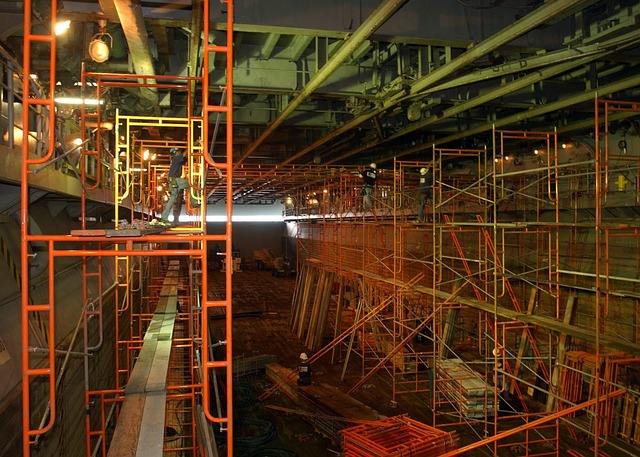
A tube and coupler scaffold has a platform(s) supported by tubing, and is erected with coupling devices connecting uprights, braces, bearers and runners. Due to their strength, these scaffolds are frequently used where heavy loads need to be carried, or where multiple platforms must reach several stories high. These scaffolds can be assembled in multiple directions, making them the preferred option for work surfaces with irregular dimensions and/or contours.
Scaffold Safety Planning
Review blueprints, work orders, the project schedule and other written requirements to determine where these scaffolds should be used. Next, select the appropriate-sized scaffold for each job. Scaffolds are generally rated as light, medium or heavy duty and must be able to support the correlating weight of workers and materials required for each type. Light-duty scaffolds can support 25 pounds per square foot. Medium-duty scaffolds can support 50 pounds per square foot. Heavy-duty scaffolds can support 75 pounds per square foot.
The following factors should be considered in the scaffold safety planning phase:
The shape and structure of the building to be scaffolded
Distinctive site conditions and any special features of the building structure in relation to the scaffold (e.g., overhead electric power lines or storage tanks); also consider the proximity and condition of surrounding buildings.
Weather and environmental conditions
Fall protection requirements for workers using scaffolds, such as guardrail systems or personal fall arrest systems
The type and amount of scaffold equipment needed to access all areas to be worked on
Proper storage and transporting of scaffolding components, materials and equipment
The manner in which workers will access the scaffold (e.g., via ladders, stair rail systems)
Scaffold Design
Scaffolds must be designed by a qualified person. Tube and coupler scaffolds over 125 feet in height must be designed by a registered professional engineer. Tube and coupler scaffold design must comply with 29 CFR §§ 1926.451–.452. The scaffold design must include the following:
Proper materials to construct the scaffold
The erected scaffold must support its own weight and at least four times the maximum intended load. To accomplish this, the scaffold design must incorporate a realistic assessment of maximum intended loads on the scaffold at all stages of erection and loading. For example, if wrapped with mesh, will the scaffold support expected wind loads? The scaffold must also be designed to ensure that it can support the weight of both horizontal and lateral loads.
Construction and loading must comply with engineered designs and manufacturers’ requirements.
Guardrails and toeboards
The amount of time needed to erect and dismantle the scaffold
Erecting the Scaffold
Use footings that are level, sound, rigid and capable of supporting the load without settlement or displacement.
Plumb and brace poles, legs, posts, frames and uprights to prevent swaying and displacement.
Position the first level of bracing as close to the base as possible.
Plumb and level the scaffold as it is being erected.
Fasten all couplers and/or connections securely before assembling the next level.
Install guys, ties and braces according to the manufacturer’s recommendations.
Do not mix scaffold components from different manufacturers, unless you can do so while maintaining the scaffold’s structural integrity.
When platform units are abutted together to create a long platform, each abutted end must rest on a separate support surface.
Once erected, provide toeboards on all railed sides to prevent falling object hazards.
Using the Scaffold
Make sure that a competent person inspects the scaffold before each work shift.
If during the inspection a defect or damage to the scaffold is discovered, the scaffold must be tagged out and not used until repairs are made. Attach tags at the access point of the scaffold.
One common tagging system uses the following tags:
Red tag indicates: unsafe, do not use.
Green tag indicates: ready to use.
Use scaffolds according to the manufacturer’s instructions.
Never load a scaffold beyond its maximum intended load or rated capacity.
Do not use makeshift methods to increase the working height of the scaffold platform, such as with ladders, buckets or blocks.
Employees must not work on platforms covered with snow, ice or other slippery material.
The employer must provide suitable access to and between scaffolds, such as portable ladders, hook-on ladders, attachable ladders and stairway-type ladders.
When dismantling the scaffold, check to ensure that the scaffold has not been structurally altered in a way that would make it unsafe. Before beginning dismantling procedures, reconstruct and/or stabilize the scaffold as necessary.
Train Workers on Scaffold Safety
Only trained and authorized persons should be allowed to use a scaffold. This training must be provided by a qualified person who understands the hazards associated with the type of scaffold being used and who knows the procedures to control or minimize those hazards. Training must include how to safely do the following:
Use the scaffold, handle materials on the scaffold and determine the maximum load limits when handling materials
Recognize and avoid scaffolding hazards such as electric shock, falls from heights and being hit by falling objects
Erect, maintain and disassemble fall and falling object protection systems
Erectors and dismantlers of tube and coupler scaffolds are at particular risk because their work starts before ladders, guardrails and platforms are completely installed. These workers must also be trained to do the following:
Recognize scaffold hazards
Properly erect, move, operate, repair, inspect, maintain and disassemble the scaffold
Identify the maximum load-carrying capacity and intended use of the scaffold
Implement Scaffold Safety to Avoid Hazards, Employers Must Do the Following:
Ensure that a competent person supervises and directs workers erecting, moving, dismantling or altering a scaffold;
Provide a safe means of access for each worker erecting or dismantling the scaffold. As early as possible, install hook-on or attachable ladders;
Ensure that workers do not climb diagonal braces to reach the scaffold platform;
Provide fall protection for workers erecting or dismantling the scaffold; and
Secure scaffolds to the structure during erection and dismantling.
For more information on scaffold safety, contact GDI Insurance Agency, Inc. and visit OSHA’s Safety and Health Topics page at www.osha.gov/SLTC/scaffolding/.
Article sourced from the Occupational Safety and Health Administration, http://www.OSHA.gov.
California’s Leader in Insurance and Risk Management
As one of the fastest growing agencies in California, GDI Insurance Agency, Inc. is able to provide its clients with the latest and greatest of what the insurance industry has to offer and much, much more.
We are headquartered in Turlock, CA, with locations across the heart of California’s Central Valley and beyond to provide a local feel to the solutions and services we provide our clients. We pride ourselves on exceeding our client’s expectations in every interaction to make sure that our client’s know how much we value and appreciate their business. Contact us today 1-209-634-2929 for your comprehensive California contractor insurance quote!
What Contractors Need To Know About Coverage, Safety and Service
You know that insurance is essential for your California construction business, but did you know that not all construction insurance brokers are the same? If you tend to compare policies based solely on price and coverage, then you are missing vital services that only select brokers can provide—services that will save you time and money. An expert broker in the construction insurance industry knows that contractors need the right coverages and services that include superior risk management, claims processing and underwriting service. Contact GDI Insurance Agency, Inc to experience a full service insurance broker 209-634-2929.
Risk Management Is Key
Most, if not all, brokers offer some type of risk management advice as part of their agency’s services. However, the quality and depth of their risk control offerings is the key differentiator. Many brokers will provide only general suggestions and generic safety programs. While those can be useful, a more comprehensive, in-depth risk control program is extremely advantageous for a contractor.
Rather than relying on general advice, brokers who specialize in the construction insurance and industry can give you tailored industry guidance. The most dedicated brokers will send a safety specialist to your worksite in order to observe your operations and create a customized risk control and safety program tailored to your unique business needs. Only after a broker understands your day-to-day needs and challenges can he or she provide meaningful solutions.
A good risk management program should emphasize safety as paramount. Worksite accidents are expensive, both in terms of claims costs and future premium increases—but also in hidden costs. You may not realize just how expensive an accident can be:
Loss of profits: Accidents may interrupt work for a time period or even cause projects to run late. In addition, property damage involved in the accident may be time consuming and costly to repair.
Soft costs: Accidents may also require manpower to be redirected away from completing construction work to manage other responsibilities, such as additional paperwork, meeting with law enforcement or following up on investigations.
Market image: No one wants to hire a contractor prone to accidents, and one or two high-profile accidents could give your firm a bad reputation. Your safety track record is an important component to winning future bids.
Psychological impact: Other employees often have strong reactions following a serious or fatal accident. They may blame the company for not protecting their co-worker or may simply need time to deal with the trauma they witnessed or were a part of. This could impact your retention and ability to hire quality workers in the future.
These examples show just how important an effective safety program is, and a good broker will help you develop comprehensive safety initiatives to address any and all risks your company faces. Remember, too, that certain safety initiatives are mandated by law. Plus, many construction insurance policies will only pay claims if you can demonstrate that your company follows strict health and safety guidelines.
What To Do When I Have A Claim
The aftermath of an accident can be a stressful and overwhelming time, and you need a broker who is quick, efficient and knowledgeable with handling claims and helping you manage the accident site. You may want to consider a broker whose agency has a local office, to ensure they are familiar with your geographic area and local nuances that can affect claims processing and settlement. In addition, your broker should have extensive experience with construction insurance industry claims, so that your claim is properly handled. A local broker can also prove more responsive after an accident. You may have to deal with the media or law enforcement officials, and your construction insurance representative can help manage that situation. Some agencies will insist on waiting for a claim to be processed before visiting the site, but dedicated brokers will be there immediately to help with preserving evidence, serving as a liaison and managing the accident site.
Why Type of Insurance Coverage Do I Need?
There are many types of coverage that a contractor needs, and only agents that specialize in the construction insurance industry will be able to ensure that you are fully covered. If your broker takes the time to learn and understand your business operations and the unique risks of your company, he or she will be able to put together a comprehensive coverage package.
You may benefit from professional liability, surety coverage or bonds and more.
Your broker should know how to coordinate your various policies to ensure that there are no gaps in coverage. When a claim occurs, a good broker will help liaise with the carriers to sort out who will handle the claim. Some policies may have exclusions that your broker should be aware of and can address with an alternative solution, such as a general liability policy that has a pollution exclusion. If you work in multiple states, that also may have implications for your contractor insurance coverages. Your broker must understand and manage all of these aspects to ensure that you are appropriately covered.
Experience the GDI Difference!
We don’t just make a sale and leave you hanging, here are just a few of the added value items we provide:
We review your contracts
Review your certificates of insurance
Additional insured endorsements
Put on classes for your staff on these topics
Full OSHA compliant safety programs
At GDI Insurance Agency, Inc. we provide this comprehensive protection plan whether you are a sole proprietor performing general remodeling, a specialty trade or artisan contractor, or the largest general construction firm in the industry
Another risk issue in the construction industry is subcontractors. You should be able to count on your broker to advise you on how to handle that relationship to best protect yourself. For instance, you may be sued for mistakes made by a subcontractor. So, in addition to including an indemnity clause in your contract, you may want to require the subcontractor to add you to their commercial general liability policy as an additional insured. A good broker will also assist you in handling any claims that arise due to a subcontractor’s mistake, which can potentially be messy and confusing.
Underwriting Service
Underwriting can hold up the quoting process when putting together a coverage package. However, brokers who have relationships with carriers and underwriters they trust can work to ensure the quickest turnaround time for a quote. Though this behind-the-scenes exchange normally does not impact you directly, agents who work with reliable, responsive underwriters can save you time when quoting a renewal or new policy.
Obtaining insurance should be a strategic component of your business. Developing a comprehensive insurance program to support your unique business needs is not something just any broker can deliver. At GDI Insurance Agency, Inc., we specialize in construction insurance and our dedicated agents are committed to learning your business and developing a customized insurance and safety plan for you. Contact us today.
California’s Leader in Insurance and Risk Management
As one of the fastest growing agencies in California, GDI Insurance Agency, Inc. is able to provide its clients with the latest and greatest of what the insurance industry has to offer and much, much more.
With locations across the heart of California’s Central Valley and beyond to provide a local feel to the solutions and services we provide our clients. We pride ourselves on exceeding our client’s expectations in every interaction to make sure that our client’s know how much we value and appreciate their business. Contact us today 1-209-634-2929 for your comprehensive contractor insurance quote!
Contractor sometimes have relationships with other contractors in which they borrow from or rent equipment to one another on a short term basis. However, most California contractors equipment policies exclude coverage for equipment that has been loaned or rented to others, which means your own equipment insurance will not cover damage to your equipment that is under someone else’s control. The borrower’s commercial general liability policy almost always excludes coverage for damage to “personal property” in the insured’s care, custody or control”, which means no coverage in that policy either, even if the borrower is legally liable for the damage to the equipment. Bottom line, borrowed equipment needs to be covered by the person borrowing the equipment.
Fortunately, most contractors equipment insurers are willing to cover equipment borrowed or rented by their insured. Some contractors equipment insurance policies automatically include equipment borrowed or rented by the insured as “covered property”, but many policies only provide this coverage if the appropriate endorsement is attached. Contractors that rent or loan construction equipment to others should require the borrower/renter to provide proof that coverage for this exposure is in place. Contact GDI Insurance Agency, Inc. for your contractors insurance options 209-634-2929.
If You Think It Is Awkward To Ask
Think about the cost of the equipment and the hassle to get the piece of equipment replaced or fixed. It could hold up your own projects in the meantime, causing delays and costs that you were not prepared to deal with.
If you’re the “nice guy” lending your construction equipment to another contractor, you need to ensure the coverage for borrowed equipment is in place by the borrower. Even if it is, check that the limit is enough in terms of value. Be sure to check on the borrower’s policy and if it prohibits the type of equipment borrowed or excludes certain coverages specific to the type of equipment loaned, such as boom or weight of load damages. If there are any issues, ask the borrower to place your piece of equipment on the scheduled list of equipment already insured by their policy.
Ensure your Construction Company and Equipment is Covered and Claim Expenses Don’t Hit Your Bottom Line:
1. Know the coverage – A borrower of equipment is likely expected to provide coverage for damaged borrowed equipment, even though there’s no contract in place. The borrower’s policy should be endorsed to provide coverage for rented or borrowed equipment. This coverage is not automatic in most policies.
2. Borrow with operator – Usually, your general liability form will not cover an item in question, as it’s considered under the borrower’s “care, custody and control”. Most contractors equipment insurers are willing to cover equipment borrowed or rented by their insured, as long as the appropriate endorsement is attached.
3. Consider a rental agreement – For longer term loans on higher value items, and for that matter any type of equipment loan or borrowed equipment, it’s advisable to establish a contract for coverage by putting the loan of equipment in an actual rental contract.
Building an Equipment Rental Contract
An equipment rental policy is an important line of defense against damage, theft or lawsuits resulting from an equipment malfunction or equipment damage. It can be tricky to draft a rental agreement that covers every potential situation, so keep these tips in mind as you create your policy.
Types of Rentals
Nearly everything used in the construction industry can be rented, such as the following:
Scaffolding
Cranes
Power tools
Ladders
Dump trucks
Bulldozers
Different types of equipment produce different hazards, so it is important to outline the risks of the equipment being rented or borrowed. Any user should be advised to read and follow the manufacturer’s specifications for safe use. Your company is not liable for negligence.
Certain equipment may require a trained operator, such as a crane. Let the renter know up front if the type of equipment they are renting requires a trained operator and if you will be providing an operator for the specified job.
Renters and borrowers are responsible for their own insurance and should be asked to provide certificates of insurance where necessary.
Renters and borrowers should be responsible for returning the equipment in the same condition it was in when rented. Normal wear and tear is acceptable.
An insurance certificate can also be issued at this point. This requires each party to check with their insurance advisors to ensure coverage is in place and adequate. Also, be careful about sharing third party rented equipment. If you loan out the crane you rented from an equipment supplier, you may void the rental agreement and any insurance coverages you may have agreed to in the rental contract.
Understanding How Insurance Coverage Works
Protect yourself, your equipment, and your professional relationships by knowing how insurance coverage will react. No matter how little risk you think there is, borrowing or lending equipment can easily add up to one big headache.
California’s Leader in Insurance and Risk Management
As one of the fastest growing agencies in California, GDI Insurance Agency, Inc. is able to provide its clients with the latest and greatest of what the insurance industry has to offer and much, much more.
With locations across the heart of California’s Central Valley and beyond to provide a local feel to the solutions and services we provide our clients. We pride ourselves on exceeding our client’s expectations in every interaction to make sure that our client’s know how much we value and appreciate their business. Contact us today 1-209-634-2929 for your comprehensive contractor insurance quote!
While distracted driving is a major problem on roads, especially here in California, cellular device distraction has been identified as the cause of many accidents on construction sites. Construction job sites pose multiple safety hazards, and the added dangers brought about by the use of cellular phones on the job can cause higher numbers of injuries and fatalities. Follow these tips to minimize job site cellphone use to help protect your employees.
Mobile technology can be a valuable tool for the construction industry, but when it comes to using it on the job site, there’s one device workers should leave behind: their cellphone. Contact GDI Insurance Agency, Inc. for a comprehensive California Contractors Insurance quote – more than just insurance, safety plans, HR, and OSHA compliance are all part of what you get from us!
More Than Communications – A Major Distraction
Although cellphones can be a necessary method of communication on job sites, they distract workers from potential hazards and recommended safety practices. And, despite an absence of OSHA regulations pertaining exclusively to cellphones on the job site, OSHA can cite employers for violating the General Duty Clause, which states the requirement to provide a workplace free from recognized hazards.
Employers can also violate OSHA’s cranes and derricks standard by allowing cellphones on the job site, since it states, “The [crane or derrick] operator must not engage in any practice or activity that diverts his or her attention while actually engaged in operating the equipment, such as the use of cellular phones.” Phones may be used for signal communications, but OSHA requires a hands-free system for the operator’s reception of signals.
Did You Know?
Cellphone usage while operating a construction vehicle on a job site poses even more of a threat than using a cellphone while driving on a public road.
Employer and Employee Liability
A construction worker who uses a cellphone while operating a motorized vehicle may face civil or criminal liability for damages they cause. An employer can also face liability for the acts of its employees if it fails to enforce a policy that prohibits texting while driving.
General contractors can also face OSHA liability for worksite hazards if they fail to address actions by subcontractor employees who use mobile phones improperly on-site. As such, general contractors should be cautious of improper mobile phone usage by their subcontractors.
4 Tips To Minimize Safety Risks
Employers in the construction industry should consider the following recommendations regarding cellphone use on construction sites:
Enact and enforce clear policies that prohibit texting and talking on a cellphone while operating any kind of motorized vehicle on-site.
Consider a prohibition on workplace cellphone use in specific areas where distractions could create employee hazards, regardless of whether the employees are operating motorized vehicles.
For company-issued cellphones, consider the use of applications that block internet access and texting functionality while in a moving vehicle.
Make construction sites cellphone-free zones, and post signs in designated areas to remind workers. Only allow workers access to their cellphones during break periods and in designated areas.
Besides the potential for OSHA penalties and legal liability, insurance rates can also be affected by job site cellphone use. With distracted employees causing an increase in accidents, the cost of workers’ compensation insurance and other insurance coverage is likely to increase.
Even without distractions from cellphones, construction sites can be hazardous. Enforcing safety practices and consistently holding workers accountable can prevent unnecessary workplace accidents and costly liability. Contact GDI Insurance Agency, Inc.for more information on minimizing the risk of job site cellphone use.
California’s Leader in Insurance and Risk Management
As one of the fastest growing agencies in California, GDI Insurance Agency, Inc. is able to provide its clients with the latest and greatest of what the insurance industry has to offer and much, much more.
With locations across the heart of California’s Central Valley and beyond to provide a local feel to the solutions and services we provide our clients. We pride ourselves on exceeding our client’s expectations in every interaction to make sure that our client’s know how much we value and appreciate their business. Contact us today 1-209-634-2929 for to experience the GDI Difference!
Although it is important for companies to trust their workers and the general public, the unfortunate reality is that theft can happen at any time. This is particularly true in the California construction industry, where expensive tools and machinery are often left in plain sight or are easily accessible to criminals. Protecting your job site isn’t always easy, but you can follow our tips to help prevent job site theft.
Construction site theft is especially damaging, as the theft of materials and tools can quickly delay a project, sometimes bringing production to a halt. Accordingly, it is essential for construction companies to understand how they can prevent job site theft before it happens. Contact GDI Insurance Agency, Inc.to protect your business with contractors insurance 209-634-2929.
What Gets Taken From The Job Site?
According to a study conducted by the Office of Community Oriented Policing Services at the U.S. Department of Justice, the most common types of theft from a construction site include:
Lumber
Building supplies
Tools
Large construction equipment
Appliances.
Most of these thefts are opportunistic crimes. Only the theft of construction equipment requires substantial planning and organization on the part of thieves.
General Job Site Theft Tips
While every job site presents its own set of unique challenges, there are a number of general tips firms can use to better secure a construction site. The following are some basic strategies you can use to protect your materials and tools from thieves:
Create a written security policy and job site security plan. These written plans should assign supervisory responsibilities, encourage awareness, and establish basic best practices for securing tools and materials.
Contact nearby property owners and local law enforcement officials whenever you start a new project. These parties can help monitor your job site, particularly during off-hours.
Establish a way for your employees to report theft or suspicious activity. Be sure to maintain complete records of any security incidents, as they can be beneficial to law enforcement in the event of theft, vandalism or similar occurrences.
Conduct thorough background checks on your employees before hiring them on full time. You should also keep a list of people authorized to be on the job site on hand at all times.
Worksite Protections
Equipping your worksite with theft prevention features is mandatory if you expect to ward off potential criminals. Whenever possible, consider doing the following:
Enclose your worksite with a security fence and provide limited access at all times. Use lockable gates whenever possible. Avoid using low-quality locks or leaving keys in the locks themselves.
Ensure that your worksite is well-lit at night to deter criminals.
Utilize signage to keep unauthorized personnel off your worksite.
Walk around the worksite at the beginning and end of each day to ensure that no items are missing.
Consider hiring security guards to patrol the construction site, particularly at night.
If possible, install security cameras to safeguard your job site. Overall, training employees on how to best keep materials and equipment out of the hands of thieves is your first line of defense against losses.
Controls for Equipment, Tools and Materials
The number of tools and machinery found on a construction site can vary heavily from day to day, making it difficult to keep track of valuables. That’s why the first step in any good protection program is to inventory the equipment you have.
An inventory should be made available for each job site and should accomplish the following:
Inventories should track all newly purchased items. Copies of the inventory should be kept in a secure location.
Inventories should be up to date and include photos of the larger, more important equipment.
To aid in the settlement and recovery of any stolen equipment, inventories should include the following:
The original date of purchase
The original cost of the equipment
The equipment’s age and serial number
Relevant manufacturer information
Firms should assign one employee to be in charge of managing the inventory. This person would be responsible for keeping track of all materials, tools and deliveries.
Other major steps to securing equipment, tools and materials include the following:
Utilize a secured area to store your equipment.
Mark and label all tools in a distinctive manner for easy identification.
Implement a checkout system of all tools and equipment so you can track their whereabouts.
Establish a key control system for heavy duty machinery.
Install anti-theft devices on mobile equipment.
Lock all oil and gas tank caps.
Park all equipment in a centralized, well-lit and secure area.
Avoid using your worksite for storage. Remove any tools, materials or equipment that are not in use.
In general, it’s important to keep inventory levels low on-site to discourage thieves. In addition, creating and maintaining an equipment program can make all the difference when it comes to safeguarding your tools.
Equipment programs should make employees, managers, supervisors and foremen responsible for equipment losses. Under such programs, all losses are must be reported, regardless of how small. You should review equipment programs at least annually.
Responding to Job Site Theft
Even if an unimportant or inexpensive piece of equipment goes missing, it’s critical to report the theft to the police. While the authorities may not always be able to recover stolen items, reporting every instance of theft helps police establish a pattern that may assist in future cases.
When a theft occurs, respond by doing the following:
Notify the proper authorities. Provide as much detail as possible, including when the theft took place and what was stolen.
Contact your insurance broker and review the specifics of your policies, including coverages, limitations and deductibles related to personal property.
File an insurance claim.
Following a theft, it’s important to take any additional steps necessary to secure your job site to prevent future losses.
Protect Your Projects
Theft is unpredictable, but there are many workplace controls that firms can implement in order to protect themselves. In addition, it’s important to speak to a broker to seek the appropriate contractors insurance coverages. Contact GDI Insurance Agency, Inc. today for more information.
California’s Leader in Insurance and Risk Management
As one of the fastest growing agencies in California, GDI Insurance Agency, Inc. is able to provide its clients with the latest and greatest of what the insurance industry has to offer and much, much more.
With locations across the heart of California’s Central Valley and beyond to provide a local feel to the solutions and services we provide our clients. We pride ourselves on exceeding our client’s expectations in every interaction to make sure that our client’s know how much we value and appreciate their business. Contact us today 1-209-634-2929 for your comprehensive contractors insurance quote!
As energy costs continue to rise and California building standards become more environmentally rigorous, it’s not uncommon for construction projects to specify sustainable building practices, or “green” building principles. But capitalizing on the trend to build green can quickly turn your profit margin from black to red if you don’t have a clear understanding of your additional contract exposures. Contact GDI Insurance Agency, Inc. for more information on construction risk management 209-634-2929.
What is Green Construction?
According to the Environmental Protection Agency, green building is the practice of creating structures and using processes that are environmentally responsible and resource-efficient throughout a building’s life cycle; from siting to design, construction, operation, maintenance, renovation and deconstruction.
These structures meet specific objectives that protect the occupant’s health, are more energy-efficient, use resources more effectively and provide business tax incentives.
How is Green Certification Achieved?
To uphold green building standards, the U.S. Green Building Council created the LEED (Leadership in Energy and Environmental Design) program, which outlines standards for building using natural resources, recycled or healthy materials. You can find the updated 2018 California LEED Requirements here!
The LEED system evaluates projects based on design, construction and operation, serving as the voluntary national standard for sustainable buildings. It uses a checklist and point system of recommended practices, achieving various point levels can certify the building as having achieved certified, silver, gold or platinum status. These practices involve such issues as efficient water and energy use, the reuse of waste materials, and the use of renewable and regionally produced products.
The California LEED certification standards are rigorous, and a simple misstep, such as not following a project’s material recycling or erosion plan, can put a project’s certification in jeopardy.
How Can I Manage My Contract Exposures?
From managing delays to guaranteeing certification, the following are some common contract considerations and ways to minimize liability risks:
Limit Contract Warranties
It’s true that green building leads to operational cost savings, healthier work and living spaces, and increased tax incentives, but it’s important to limit warranties to those expressly provided in the contract. If you oversell the benefits that you can deliver, you could face alleged fraud or false advertising charges.
Additionally, no single party is responsible for meeting a construction project’s certification goals, and certification is typically regulated by a third party over which you have no control. Therefore, never guarantee the level of certification on a project. Instead, warrant that the work will meet project specifications and accepted industry standards.
Reduce Delay Risks
Anticipate unexpected delays, such as a shortage of green materials or lack of skilled workers, by updating the contract’s force majeure clause to shift the risk allocation for these types of delays to the owner.
Also specifically define in the contract what is meant by substantial completion, and don’t tie it to a project’s certification status. Obtaining certification may take up to a year after substantial completion of a project is reached. Therefore, it is also advisable to revise the contract if it restricts payments to you based on certification status.
Define Consequential Damages
While many traditional construction contracts include mutual waivers of consequential damages, it is unclear if the courts consider lost tax incentives, decreased energy savings, decreased water bill savings, etc. as consequential damages. To ensure that these types of sustainable construction damages are waived, include them in the clause waiving consequential damages.
Retain Right to Cure
Green building projects often use new, unproven materials and technologies, which may lead to future maintenance and performance issues. Spell out in the contract who is responsible for a component’s maintenance or malfunction, or what happens if a manufacturer goes out of business. Additionally, incorporate a clause which states that you retain the right to cure any alleged defective work, materials or equipment prior to the owner hiring another contractor to repair the work.
Avoidable Estimation Mistakes in Construction
In the past three years, only 31 percent of construction projects came within 10 percent of their budgets, according to RSMeans, a provider of construction cost information. Completing projects within budget is a constant challenge for many contractors. Here are five estimating mistakes to be aware of, along with best practices to combat them.
Unrealistic expectations—Don’t rely on ideal or worst-case scenarios, which can lead to impractical estimates. Find the middle ground to avoid setting expectations too high and blowing timelines.
Flying solo—Don’t be afraid to use outside data sources from a credible third party. Create a realistic estimate by including a combination of your own historical data and their custom data.
Lack of or wrong permits—If you lack permits or have the wrong type, work can come to a standstill. Factor proper permits into your estimate, as well as their corresponding costs.
Unclear parameters—Parameters must be established clearly at the onset of each project. Make sure you clearly understand your clients’ limitations and restrictions before creating an estimate to avoid unnecessary change orders.
Missing details—A lack of knowledge, missing items or generalized task descriptions can lead to estimates that are too low. Take the time to account for all necessary materials, labor and equipment by referencing similar work done in the past or detailed cost data from a third party.
Count on Our Construction Expertise
The process of taking a green building project from conception to use is complex. You can count on our firm’s well-informed risk managers to help you pinpoint exposures unique to your construction business and the potential ways to manage or transfer those risks. We also have a specialty insurance program for our solar installers!
Contact GDI Insurance Agency, Inc. at 209-634-2929 today to learn more about our insurance and construction loss control solutions.
We use cookies to optimize our website and our service.
Functional cookies
Always active
The technical storage or access is strictly necessary for the legitimate purpose of enabling the use of a specific service explicitly requested by the subscriber or user, or for the sole purpose of carrying out the transmission of a communication over an electronic communications network.
Preferences
The technical storage or access is necessary for the legitimate purpose of storing preferences that are not requested by the subscriber or user.
Statistics
The technical storage or access that is used exclusively for statistical purposes.The technical storage or access that is used exclusively for anonymous statistical purposes. Without a subpoena, voluntary compliance on the part of your Internet Service Provider, or additional records from a third party, information stored or retrieved for this purpose alone cannot usually be used to identify you.
Marketing
The technical storage or access is required to create user profiles to send advertising, or to track the user on a website or across several websites for similar marketing purposes.