The forces of plate tectonics have shaped the earth over many years, as the huge plates that form the earth’s surface slowly move over, under and past each other. Sometimes, the movement is gradual. At other times, the plates are locked together, unable to release accumulated energy. When the accumulated energy grows strong enough, the plates break free. If the earthquake occurs in a populated area, it can cause many deaths and injuries, as well as extensive property damage. Now is the time to get prepared for an earthquake.
While earthquakes are widely believed to be only a West Coast occurrence, there are actually 45 states and territories throughout the United States that are at moderate to high risk for earthquakes, including the New Madrid fault line that runs through the Midwest.
Know the Earthquake Terms
One part of getting prepared for an earthquake is to familiarize yourself with these terms to help identify an earthquake hazard:
Aftershock – An earthquake of similar or lesser intensity that follows the main earthquake.
Earthquake – A sudden slipping or movement of a portion of the earth’s crust, causing a series of vibrations on the earth’s surface.
Epicenter – The place on the earth’s surface directly above the point on the fault where the earthquake began. Once fault slippage begins, it continues along the fault during the earthquake and can extend hundreds of miles before stopping.
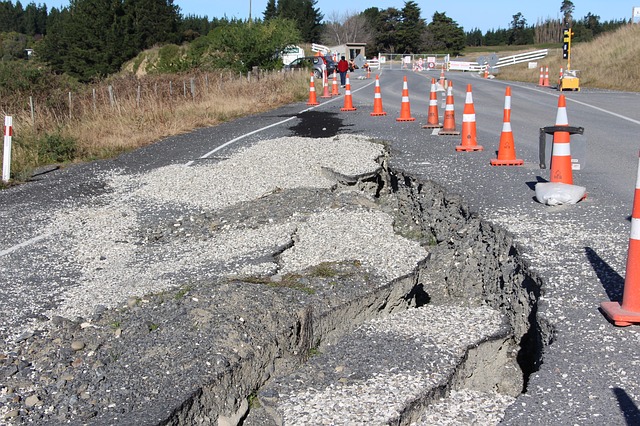
Fault – A fracture in the earth’s surface where land slipped during an earthquake. The slippage may range from less than an inch to more than 10 yards in a severe earthquake.
Magnitude – The amount of energy released during an earthquake. A magnitude of 7.0 on the Richter scale indicates an extremely strong earthquake. Each whole number on the scale represents an increase of about 30 times more energy released than the previous whole number represents. Therefore, an earthquake measuring 6.0 is about 30 times more powerful than one measuring 5.0.
Seismic waves – Vibrations that travel outward from the earthquake fault at speeds of several miles per second. Although fault slippage directly under a structure can cause considerable damage, the vibrations of seismic waves cause most of the destruction during earthquakes.
Getting Prepared for an Earthquake Before an Earthquake
Here are some things you can do to get prepared for an earthquake and protect yourself, your family and your property in the event of an earthquake:
Build an emergency kit and make a family communication plan.
Fasten shelves securely to walls.
Place large or heavy objects on lower shelves.
Store breakable items such as bottled foods, glass and china in low, closed cabinets with latches.
Fasten heavy items such as pictures and mirrors securely to walls and away from beds, couches and any other places people sit.
Brace overhead light fixtures and top-heavy objects.
Repair defective electrical wiring and leaky gas connections. These are potential fire risks. Get appropriate professional help. Do not work with gas or electrical lines yourself.
Install flexible pipefittings to avoid gas or water leaks. Flexible fittings are more resistant to breakage.
Secure your water heater, refrigerator, furnace and gas appliances by strapping them to the wall studs and bolting them to the floor. If your gas company recommends it, install an automatic gas shut-off valve that is triggered by strong vibrations.
Repair any deep cracks in ceilings or foundations. Get expert advice if there are signs of structural defects.
Be sure the residence is firmly anchored to its foundation.
Store weed killers, pesticides and flammable products securely on bottom shelves in closed cabinets with latches.
Locate safe spots in each room under a sturdy table or against an inside wall. Reinforce this information by moving to these places during each drill.
Hold earthquake drills with your family. Remember to drop, cover and hold on.
During an Earthquake
Drop, cover and hold on. Minimize your movements to a few steps to a nearby safe place. Get prepared for an earthquake, before it happens.
If Indoors
DROP to the ground; take COVER by getting under a sturdy table or other piece of furniture; and HOLD ON until the shaking stops. If there isn’t a table or desk near you, cover your face and head with your arms and crouch in an inside corner of the building.
Stay away from glass, windows, outside doors and walls, and anything that could fall, such as lighting fixtures or furniture.
Stay in bed if you are there when the earthquake strikes. Hold on and protect your head with a pillow, unless you are under a heavy light fixture that could fall. In that case, move to the nearest safe place.
Do not use a doorway unless you know it is a strongly supported, load-bearing doorway and it is close to you. Many inside doorways are lightly constructed and do not offer protection.
Stay inside until the shaking stops and it is safe to go outside. Do not exit a building during the shaking. Research has shown that most injuries occur when people inside buildings attempt to move to a different location inside the building or try to leave.
DO NOT use the elevators.
Remember that the electricity may go out or the sprinkler systems or fire alarms may turn on.
If Outdoors
Stay there.
Move away from buildings, streetlights and utility wires.
Once in the open, stay there until the shaking stops. The greatest danger exists directly outside buildings, at exits and alongside exterior walls. Many of the 120 fatalities from the 1933 Long Beach earthquake occurred when people ran outside of buildings only to be killed by falling debris from collapsing walls. Ground movement during an earthquake is seldom the direct cause of death or injury. Most earthquake-related casualties result from collapsing walls, flying glass and falling objects.
If in a Moving Vehicle
Stop as quickly as safety permits and stay in the vehicle. Avoid stopping near or under buildings, trees, overpasses and utility wires.
Proceed cautiously once the earthquake has stopped. Avoid roads, bridges or ramps that might have been damaged by the earthquake.
If Trapped Under Debris
Do not light a match.
Do not move about or kick up dust.
Cover your mouth with a handkerchief or clothing, if available.
Tap on a pipe or wall so rescuers can locate you. Use a whistle if one is available. Shout only as a last resort. Shouting can cause you to inhale dangerous amounts of dust.
After an Earthquake
When the shaking stops, look around to make sure it is safe to move. Then exit the building.
Expect aftershocks. These secondary shockwaves are usually less violent than the main quake but can be strong enough to do additional damage to weakened structures. Aftershocks can occur in the first hours, days, weeks or even months after the quake.
Help injured or trapped persons. Remember to help people who may require special assistance, such as infants, the elderly and people with access and functional needs. Give first aid where appropriate. Do not move seriously injured persons unless they are in immediate danger of further injury. Call for help.
Look for and extinguish small fires. Fire is the most common hazard after an earthquake.
Listen to a battery-operated radio or television for the latest emergency information.
Be aware of possible tsunamis if you live in coastal areas. These are also known as seismic sea waves (mistakenly called “tidal waves”). When local authorities issue a tsunami warning, assume that a series of dangerous waves is on the way. Stay away from the beach.
Use the telephone only for emergency calls.
Go to a designated public shelter if your home has been damaged and is no longer safe. Text SHELTER and your ZIP code to 43362 (4FEMA) to find the nearest shelter in your area (example: shelter 12345).
Stay away from damaged areas unless your assistance has been specifically requested by police, fire or relief organizations. Return home only when authorities say it is safe.
Be careful when driving after an earthquake and anticipate traffic light outages.
After it is safe to return, your safety should be your primary priority as you begin clean up and recovery.
Open cabinets cautiously. Beware of objects that may fall off shelves.
Put on long pants, a long-sleeved shirt, sturdy shoes and work gloves to protect against injury from broken objects.
Clean up spilled medicines, bleaches, gasoline or other flammable liquids immediately. Leave the area if you smell gas or fumes from other chemicals.
Inspect the entire length of chimneys for damage. Unnoticed damage could lead to a fire.
Inspect utilities.
Check for gas leaks. If you smell gas or hear a blowing or hissing noise, open a window and quickly leave the building. Turn off the gas at the outside main valve if you can and call the gas company from a neighbor’s home. If you turn off the gas for any reason, it must be turned back on by a professional.
Look for electrical system damage. If you see sparks or broken or frayed wires, or if you smell hot insulation, turn off the electricity at the main fuse box or circuit breaker. If you have to step in water to get to the fuse box or circuit breaker, call an electrician first for advice.
Check for sewage and water line damage. If you suspect sewage lines are damaged, avoid using the toilets and call a plumber. If water pipes are damaged, contact the water company and avoid using water from the tap. You can obtain safe water by melting ice cubes.
In addition to insuring your home, we are committed to helping you and your loved ones stay safe when disaster strikes. Being prepared for an earthquake before it happens can be instrumental for your safety. If you would like more information on developing a family emergency plan or building a disaster supply kit, please contact GDI Insurance Agency, Inc. at 209-634-2929 or www.gdiinsurance.com today.
Gone are the days when the most sensitive information on an employee’s phone was the names and phone numbers of their contacts. Now, a smartphone or tablet can be used to gain access to anything, including emails, stored passwords and even proprietary company data. Depending on how your organization uses such devices, unauthorized access to the information on a smartphone or tablet could be just as damaging as a data breach involving a traditional computer system. In order to protect your organization, there are a number of mobile device security measures to consider.
What Is Mobile Device Security?
Mobile device security refers to the measures taken to protect sensitive data stored on portable devices. It is also the ability to prevent unauthorized users from using mobile devices to access your business network. Examples of devices that require this type of protection include smartphones, laptops, tablets, wearables, and other portable devices.
Mobile devices can be hit with malicious mobile apps, phishing scams, data leakage, spyware, and unsecure WiFi networks. On top of that, businesses have to account for the possibility of the either the employee losing the mobile device or the device being stolen.
What Mobile Device Security Measures to Consider:
Establish
a mobile device policy—Before issuing mobile phones or tablets to your
employees, establish a device usage policy. Provide clear rules about what
constitutes acceptable use as well as what actions will be taken if employees
violate the policy. It is important that employees understand the security
risks inherent to mobile device use and how they can mitigate those risks. Well-informed,
responsible users are your first line of defense against cyber attacks.
Establish
a bring your own device (BYOD) policy—If you allow employees to use their
personal devices for company business, make sure you have a formal BYOD policy
in place. Your BYOD security plan should also include the following practices:
Installing
remote wiping software on any personal device used to store or access company
data.
Educating
and training employees on how to safeguard company data when they access it
from their own devices.
Informing
employees about the exact protocol they must follow if their device is lost or
stolen.
Keep the
devices updated with the most current software and anti-virus program—Software
updates to mobile devices often include patches for various security holes, so
it’s best practice to install the updates as soon as they’re available. There
are many options to choose from when it comes to anti-virus software for mobile
devices, so it comes down to preference. Some are free to use, while others
charge a monthly or annual fee and often come with better support.
Back up
device content regularly—Just like your computer data should be backed up
regularly, so should the data on your company’s mobile devices. If a device is
lost or stolen, you’ll have peace of mind knowing your valuable data is safe.
Mobile Device Usage
The number of mobile phone users around the world is projected to exceed the five billion mark by 2019. This rapid increase, unfortunately, sees cyber criminals adapting and changing their methods to profit from this growing number of potential victims.
Because of their convenience, smartphones and tablet devices
have become a universal presence in the modern business world. As usage soars,
it becomes increasingly important to take steps to protect your company from
mobile threats, both new and old.
For more cyber security strategies you can use to protect your businesses, contact GDI Insurance Agency, Inc. today at 209-634-2929.
California’s Leader in Insurance and Risk Management
As one of the fastest growing agencies in California, GDI Insurance Agency, Inc. is able to provide its clients with the latest and greatest of what the insurance industry has to offer and much, much more.
We are headquartered in Turlock, CA, with locations across the heart of California’s Central Valley, Northern California and beyond to provide a local feel to the solutions and services we provide our clients. We pride ourselves on exceeding our client’s expectations in every interaction to make sure that our client’s know how much we value and appreciate their business. Contact us today 1-209-634-2929 for your comprehensive cyber liability insurance quote!
The Employers’ Liability Component of Workers’ Compensation Insurance
As an employer, it’s your responsibility to ensure your workers remain both safe and healthy on the job. However, accidents are common even in otherwise safe industries, making workers’ compensation insurance coverage a must. These policies have two main parts—Part One: Workers’ Compensation Insurance and Part Two: Employers’ Liability Insurance.
GDI Insurance Agency, Inc. will examine Part Two, giving you a better sense of what’s covered under your policy.
Employers’ Liability Insurance and What It Covers
The main purpose of workers’ compensation insurance is to ensure that injured workers receive medical care and benefits when they are injured on the job and unable to work (Part One). However, employees may still sue your organization for damages if they feel your negligence caused the injury in the first place. That’s where Part Two of workers’ compensation insurance comes in.
Part Two, which is often referred to as employers’ liability insurance, protects your organization should employees file a lawsuit following an on-the-job accident that isn’t subject to state statutory benefits. This component of workers’ compensation insurance pays for attorney’s fees, court costs, and settlements or judgments.
Employers’ liability coverage can be especially useful following a variety of claims, including:
Third-party action—If an employee is injured
at work, they may not sue you directly. However, they could sue a third party
who could then file their own lawsuit against you. For instance, if an employee
hurts themselves on a piece of machinery, they could sue the equipment
manufacturer. That manufacturer could then sue you if they feel your negligence
led to the accident.
Loss of consortium—In the event that an
employee is injured, a spouse may file a lawsuit for injuries that result in a
loss of a family relationship. For instance, should an employee be severely
injured or killed on the job, employers’ liability coverage can provide a level
of protection.
Dual-capacity suit—These types of lawsuits
occur when an employer and employee have more than one relationship. One common
example of this is when an employee is injured by a product that the employer
manufacturers. In this case, the organization could be held liable as both an
employer and a manufacturer.
Consequential body injury—These types of claims refer
to consequential damages linked to the initial accident. For instance, a spouse
may sue your organization should the injury to their loved one negatively
impact their own health (e.g., elevated blood pressure).
Not all workers’ compensation policies include employers’ liability coverage automatically. As such, it’s important to speak with a qualified insurance broker who can help you better understand your coverage and identify any gaps.
California’s Leader in Insurance and Risk Management
As one of the fastest growing agencies in California, GDI Insurance Agency, Inc. is able to provide its clients with the latest and greatest of what the insurance industry has to offer and much, much more.
We are headquartered in Turlock, CA, with locations across the heart of California’s Central Valley, Northern California and beyond to provide a local feel to the solutions and services we provide our clients. We pride ourselves on exceeding our client’s expectations in every interaction to make sure that our client’s know how much we value and appreciate their business. Contact us today 1-209-634-2929 for your comprehensive employers’ liability insurance quote!
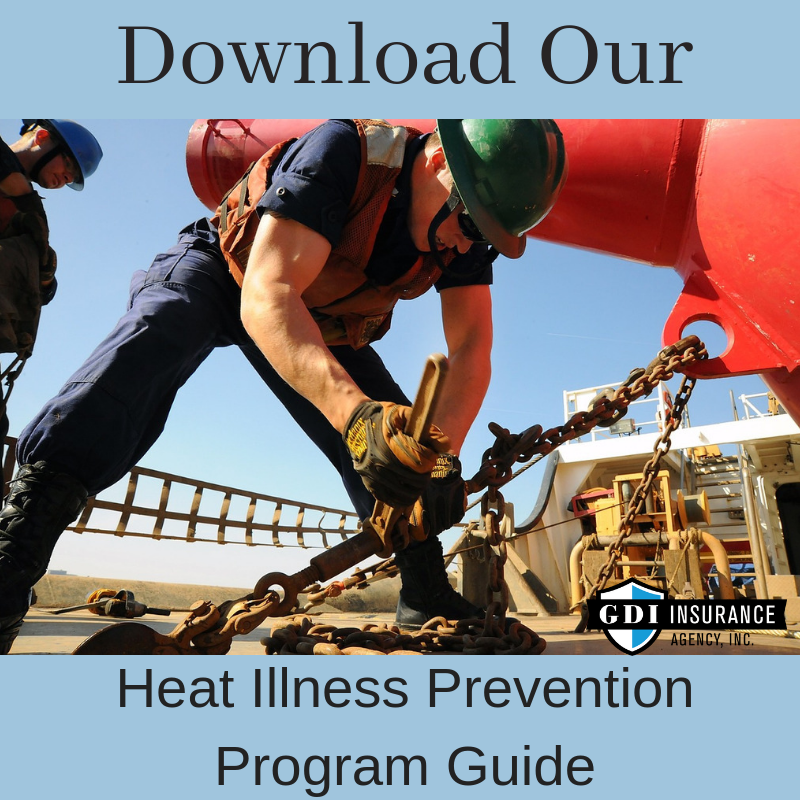
The purpose of the Heat Illness Prevention Program is to meet the requirements set forth in the Standard and to serve as a required supplement of the Injury and Illness Prevention (IIP) Program. This program establishes procedures and provides information to ensure that employees are knowledgeable in the prevention and recognition of heat stress to ensure their own safety and the safety of others.
In Central California, on average, our hot season starts June 5 and runs until September 23rd. Being prepared can reduce the stress of last minute preparations for hot weather and heat illness.
GDI Insurance Agency, Inc. has the safety and compliance tools your business needs. Contact us today for your free business insurance quote and experience the GDI Difference. Call us at 209-634-2929.
Basic Requirements for Heat Illness Prevention
California has specific requirements when it comes to Heat Illness Prevention. Each member of your team has certain responsibilities for heat illness prevention.
Health & Safety Coordinator
Establish and update the written
Heat Illness Prevention Program;
Provide consultation/training to
departments who fall within the program; and
Assist departments in determining
when, where, and how shade and water is provided.
Supervisors
Identify and maintain records of
all tasks/employees that are required to work outdoors where potential heat
illness could occur;
Require all potentially impacted
employees to receive proper training on heat illness prevention and comply with
all appropriate procedures;
Maintain training records;
Ensure that adequate water is
available at the beginning of each shift and throughout the work day;
Ensure access to shade for
purposes of a preventative recovery period is available during the work day; and
Follow proper procedures to
contact emergency medical services in the event medical assistance is required.
Employees
Awareness and compliance with all
appropriate heat illness prevention procedures while performing assigned duties;
Employees are ultimately
responsible for drinking adequate amounts of hydrating fluids when the
environmental risk factors for heat illness are present;
Ensure access to a shaded area is
available to recover from heat-related symptoms;
Inform their supervisor if shade
and/or water are inadequate;
Report symptoms of heat-related
illness promptly to their supervisor; and
Follow proper procedures in the
event medical assistance is required.
Provision of Water
Employees will have access to potable
drinking water. Water will be fresh, pure, suitably cool and provided to
employees free of charge. The water will be located as close as practicable to
the areas where employees are working. Where water is not plumbed, or otherwise
continuously supplied, it will be provided in sufficient quantity at the
beginning of the work shift. Sufficient quantity is defined as enough to
provide one quart per employee per hour for drinking for the entire shift. The
frequent drinking of water, as described in the training section, will be
encouraged.
Access to Shade
When the temperature exceeds 80 F° the
company will provide access to one or more shade areas.
Shade areas will be large enough to accommodate the number of employees on recovery,
meal breaks or rest periods so that they can sit in a normal posture fully in
the shade, without having to be in physical contact with each other. Shade
areas will be located as close as practicable to the areas where employees are
working. Shade areas will also be either open or provided with ventilation or
cooling.
When the temperature is equal to or lower
than 80 F°, the company will either provide shade
as described above or provide timely access to shade upon employee request.
When infeasible or unsafe to have a shade structure, or otherwise to have shade present on a continuous basis, the company may utilize alternative procedures for providing access to shade. Alternative procedures will provide equivalent protection.
High-Heat Procedures
The following high-heat procedures will be implemented when the temperature exceeds 95 F°:
Ensure that effective
communication by voice, observation or electronic means is maintained so that
employees at the work site can contact a supervisor when necessary. An
electronic device, such as a cell phone or text messaging device, may be used
for this purpose only if reception in the area is reliable;
Observe employees for alertness
and signs or symptoms of heat illness. The employer will ensure effective
employee observation or monitoring by implementing one or more of the
following:
Supervisor or designee observation of 20 or fewer employees;
Mandatory buddy system;
Regular communication with sole employee (such as by radio or cellular
phone); or
Other effective means of observation;
Designate one or more employees on
each worksite to call for emergency medical services, and allow other employees
to call for emergency services when no designated employee is available;
Remind employees throughout the
work shift to drink plenty of water; and
Pre-shift meetings before the
commencement of work must review high heat procedures, encourage employees to drink
plenty of water and remind employees of their right to take a cool-down rest
when necessary.
In addition, when temperatures reach 95 F°,
agricultural employers must also ensure that their agricultural workers take a
minimum 10-minute preventative cool-down rest period every two hours. The
preventative cool-down rest period required by this paragraph may be provided
concurrently with any other required meal or rest period.
Emergency Response Procedures
The company will implement effective emergency response procedures, including:
Ensure that effective
communication by voice, observation, or electronic means is maintained so that
employees at the work site can contact a supervisor or emergency medical
services when necessary. An electronic device, such as a cell phone or text
messaging device, may be used for this purpose if reception in the area is
reliable. If an electronic device will not furnish reliable communication in
the work area, the employer will ensure a means of summoning emergency medical
services;
Respond to signs and symptoms of
possible heat illness, including but not limited to first aid measures and how
emergency medical services will be provided. If a supervisor observes, or any
employee reports, any signs or symptoms of heat illness in any employee, the
supervisor will take immediate action commensurate with the severity of the
illness. If the signs or symptoms are indicators of severe heat illness (such
as, but not limited to, decreased level of consciousness, staggering, vomiting,
disorientation, irrational behavior or convulsions), the employer will implement
emergency response procedures. An employee exhibiting signs or symptoms of heat
illness will be monitored and will not be left alone or sent home without being
offered onsite first aid or being provided with emergency medical services in accordance
with these procedures;
Contact emergency medical services
and, if necessary, transporting employees to a place where they can be reached
by an emergency medical provider; and
Ensure that, in the event of an
emergency, clear and precise directions to the work site are provided as needed
to emergency responders.
Heat Illness Prevention
Working outside, you know that the weather can have an impact on your day. Hot weather, especially when combined with strenuous physical labor, can cause your body temperature to rise to unsafe levels. Normally, your body cools itself through sweating, but in hot and humid weather, sweating is not enough and the result can be a dangerous heat illness.
Staying Cool
Follow the suggestions below to
stay cool when working in hot weather:
Wear loose, light-colored clothing when
possible, along with a hard hat.
Take short breaks to rest in the shade. If
wearing outer protective gear, remove during your break.
Gradually build up to heavier work.
Avoid overexerting yourself during peak
temperature periods (midday).
Drink liquids frequently, even if you don’t feel
thirsty – at least eight ounces every 20 to 30 minutes. Choose water, fruit
juice or sports drinks and stay away from liquids containing caffeine, which
can dehydrate you.
Recognizing the Symptoms
There are three forms of heat
illness, each with the following distinct symptoms:
Heat Cramps – severe muscle spasms in the back, stomach, arms and legs, which are attributed to the loss of body salt and water during periods of heavy perspiration
Heat Exhaustion – heavy sweating, cool or pale skin, nausea, headache, weakness, vomiting and fast pulse
Heat Stroke – high body temperature, sweating stops, red and often dry skin, rapid breathing and pulse, headache, nausea, vomiting, diarrhea, seizures, confusion or unconsciousness
Providing Treatment
It is essential to treat heat
illness as soon as possible. If you are feeling any of the above symptoms,
inform a co-worker and ask for help. If you suspect that a fellow worker has
any of these conditions, follow the first-aid suggestions below:
Heat Cramps – Move the victim to a cooler area
and allow them to drink approximately six ounces of water every 15 minutes.
Follow up with a medical examination.
Heat Exhaustion – Move the victim to a cooler
area and keep him/her lying down with legs slightly elevated. Cool his/her body
by fanning and applying cool, wet towels. If conscious, allow the victim to
drink approximately six ounces of water every 15 minutes. Follow up with a
medical examination.
Heat Stroke – You or a bystander should
immediately call an ambulance. Meanwhile, move the victim to a cooler area,
remove any outer clothing, immerse him/her in cool water or apply cool, wet
towels or cloths to the body. Do NOT give the victim liquids. If medical help
is delayed, call the hospital for further instructions while waiting. Heat
stroke is life-threatening, so it’s important to move quickly!
Safety Reminder
The risk of heat illness increases
with age, poor diet, being overweight, insufficient liquid intake, poor
physical condition and/or when taking medication. Never take salt tablets
without your doctor’s approval.
Be aware of expected weather conditions each day so that you can be prepared with appropriate clothing and beverages. If you are on a job and start to feel any adverse symptoms due to heat, inform your supervisor and take a break.
California’s Leader in Insurance and Risk Management
As one of the fastest growing agencies in California, GDI Insurance Agency, Inc. is able to provide its clients with the latest and greatest of what the insurance industry has to offer and much, much more.
We are headquartered in Turlock, CA, with locations across the heart of California’s Central Valley, Northern California and beyond to provide a local feel to the solutions and services we provide our clients. We pride ourselves on exceeding our client’s expectations in every interaction to make sure that our client’s know how much we value and appreciate their business. Contact us today 1-209-634-2929 for your comprehensive business insurance quote!
The 4th of July celebration is something I look forward to every year. From small town parades to a sky filled with fireworks, there is so much to see and do. These 4th of July Celebration Safety Tips may seem simple, but they sure can keep you and your family safe.
Fireworks Safety 101
Each year, over 10,000 people suffer firework burn injuries in the United States. The National Council on Fireworks Safety reported that 15% of those injuries were from sparklers. In addition, the US Consumer Products Safety Commission reports that 57% of sparkler injuries occur in children under 5 years of age.
Check to see if fireworks are legal in your area. If they are, research the guidelines for using them.
Do not allow young children to play with or light fireworks
Do not buy fireworks packaged in brown paper. This indicates the fireworks are to be used by a professional. They could be very dangerous when used by untrained persons.
Do not attempt to shoot off fireworks from glass or metal containers.
Never attempt to re-light or pick up a firework that did not properly ignite.
Never place any body part above or in front of a fireworks device while lighting the fuse. Immediately back up to a safe distance when igniting fireworks.
Only light fireworks one at a time. Move back quickly, in-between lighting each firework.
Never transport fireworks by carrying them in your pocket.
Never throw fireworks, or point them at another person.
Once fireworks complete their burning, douse the used devices with plenty of water. Do this to all devices, whether or not the fireworks deployed properly.
Be sure to keep a bucket of water handy, in case of a firework accident. A garden hose is also helpful!
4th of July Sparklers
Sparklers burn a very high temperatures, between 1800 and 3000 F. This is hot enough to melt some metals. Be sure than an adult supervises children with sparklers at all times. NEVER give a sparkler to a child under 5 years of age.
Protecting Your Pets on the 4th of July
More pets get lost on the 4th of July than any other day of the year. Keep your dog safe this Independence Day with these 8 tips.
Be sure your dog is wearing an up-to-date and visible ID tag on their collar at all times.
Take a current photo of your dog.
Exercise your dog early in the day, before parties begin.
During cookouts, ask guest to play with your dog away from the flames.
Keep charcoal, fireworks, sparklers and glow sticks far from curious canines.
Keep dog treats on hand for those who want to give your dog food.
Leave your dog at home with a frozen stuffed treat during fireworks.
If your dog is afraid of loud noises, leave gentle music playing to cover the sound of fireworks.
We use cookies to optimize our website and our service.
Functional cookies
Always active
The technical storage or access is strictly necessary for the legitimate purpose of enabling the use of a specific service explicitly requested by the subscriber or user, or for the sole purpose of carrying out the transmission of a communication over an electronic communications network.
Preferences
The technical storage or access is necessary for the legitimate purpose of storing preferences that are not requested by the subscriber or user.
Statistics
The technical storage or access that is used exclusively for statistical purposes.The technical storage or access that is used exclusively for anonymous statistical purposes. Without a subpoena, voluntary compliance on the part of your Internet Service Provider, or additional records from a third party, information stored or retrieved for this purpose alone cannot usually be used to identify you.
Marketing
The technical storage or access is required to create user profiles to send advertising, or to track the user on a website or across several websites for similar marketing purposes.