The internet, smartphones and other online
technologies have helped businesses streamline their supply chains and
inventories. However, human error, software incompatibilities between vendors
and a lack of transparency can cause even the most efficient operations to
experience time-consuming and costly errors.
Online
cryptocurrencies like bitcoin depend on a technology called blockchain that can
instantly share, secure, verify and store records simultaneously. As a result,
many businesses are using blockchain systems to implement efficient and secure
recordkeeping systems.
What is Blockchain and How Does It Work?
Blockchain is a
new type of shared, encrypted recordkeeping system that can be seen in real
time by everyone involved in a supply chain or other business operation. These systems
work by recording a separate record, or “block,” every time a process is
updated.
Essentially,
each block in the system serves as a digital puzzle piece that verifies the
next record, creating a digital chain. Each block is encrypted and can’t be
changed, since altering any information in the record would be like taking a
piece out of a finished puzzle and trying to change its shape.
Advantages of Blockchain
Because each stakeholder
in an operation keeps a separate copy of blockchain records, the systems allows
for a large amount of transparency and communication. Businesses can also
customize how users see information in a blockchain system. For example, an
online retailer could let a customer view their orders and shipping statuses,
but not their full inventory system.
Blockchain
technology can give businesses an instant picture of both large and small-scale
operations, such as a single product’s location or real-time sales figures. And
since records can’t be altered or viewed without permission, they’re extremely
safe from cyber attacks and data breaches.
Potential Applications
Here are some
of the potential benefits of a blockchain management system:
Flexible scalability—A business can use a blockchain system internally to track projects and other workflows, or multiple organizations can share the platform to organize large-scale operations.
Security—Records that use blockchain are encrypted, verified and shared between all users. As a result, blockchain is very secure against tampering and cyber attacks.
Transparency—Advanced sensors and other tracking technology can update blockchain records to give businesses an ongoing view of a supply chain without fear of human error or biased reporting.
Innovation—New services are beginning to automate complex systems like contractual obligations, employee security credentials and personal data protection using blockchain technology.
Detailed analytics—Businesses can track individual products to gather important information at any time, such as the origin of a dysfunctional product or a food item’s expiration date
California’s Leader in Insurance and Risk Management
As one of the fastest growing agencies in California, GDI Insurance Agency, Inc. is able to provide its clients with the latest and greatest of what the insurance industry has to offer and much, much more.
We are headquartered in Turlock, CA, with locations across the heart of California’s Central Valley, Northern California and beyond to provide a local feel to the solutions and services we provide our clients. We pride ourselves on exceeding our client’s expectations in every interaction to make sure that our client’s know how much we value and appreciate their business. Contact us today 1-209-634-2929 for your comprehensive insurance quote!
Teens and young adults often face hefty auto insurance premiums because, statistically, they are more likely to get into car accidents. The Department of Motor Vehicles reports that the crash rate for those between the ages of 16-19 is 2.7 times greater than that of the average driver. However, most carriers offer a simple solution to combat this financial burden—offering a good student discount. GDI Insurance Agency, Inc. offers a teen driver insurance program where you can find affordable auto insurance.
The Good Student Discount
The good student discount is an
auto insurance discount provided by carriers that benefits students financially
for their academic achievement. In other words, this discount offers reduced
premium rates for current students that maintain a specific GPA or other
measurable level of success in school.
The Journal of Accident Analysis and Prevention found in a recent study that students with a C or D average in school are 49 percent more likely to get into a car accident than those with an A or B average. As a result, students with an A or B average are labeled as low-risk drivers by car insurance companies and rewarded with lower rates.
How To Receive the Good Student Discount
In order to receive the good student discount, you will need to provide both proof of enrollment and proof of academic achievement. This proof can be provided to carriers in the form of a report card or transcript, standardized test score results, a letter from a school administrator, or a dean’s list or honor roll certificate. In the case of a home-schooled student, you will need to provide a certification signed by a home-schooled certifying body such as the State Department of Education
While specific qualifications vary between carriers and states, most auto insurance companies typically require students to meet the following standards:
Be under the age of 25
Be currently enrolled
full time in high school, college or university
Maintain at least a
3.0 GPA
Score in the top 20
percent on the PSAT, SAT or ACT
Receive recognition on
the dean’s list or honor roll
California’s Leader in Insurance and Risk Management
As one of the fastest growing agencies in California, GDI Insurance Agency, Inc. is able to provide its clients with the latest and greatest of what the insurance industry has to offer and much, much more.
We are headquartered in Turlock, CA, with locations across the heart of California’s Central Valley, Northern California and beyond to provide a local feel to the solutions and services we provide our clients. We pride ourselves on exceeding our client’s expectations in every interaction to make sure that our client’s know how much we value and appreciate their business. Contact us today 1-209-634-2929 for your comprehensive Teen Driver insurance quote!
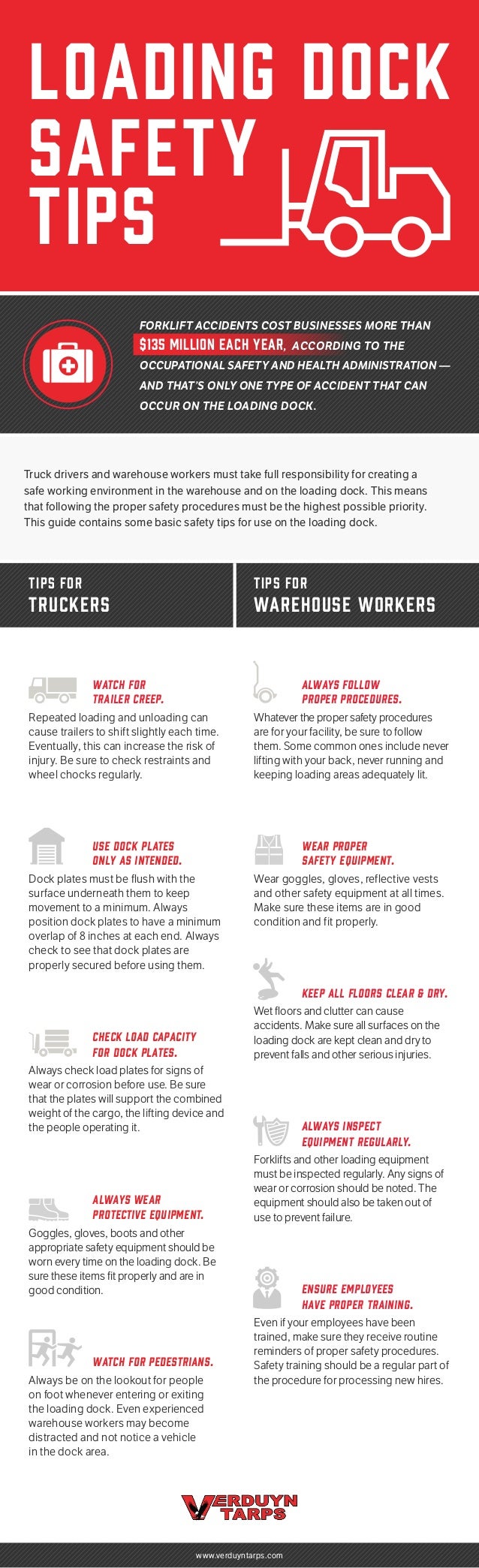
The loading dock is an essential component of ’s business, but despite its daily use, it still presents serious safety hazards. There are risks for pinch point injuries from rolling doors, falls from elevated docks and truck beds, and accidental collisions between equipment and workers, among other injury-causing hazards. Keep this loading dock safety list in mind for your California warehouse business. Contact GDI Insurance Agency, Inc. for your complete warehouse insurance package. 209-634-2929
All
workers must be alert to these hazards to avoid injury. To stay safe at your
facility’s loading dock, consider these useful recommendations:
Always wear the proper personal
protective equipment (PPE), such as gloves and steel-toed boots with grip
soles. Wear earmuffs or plugs where required.
Make sure trailer lanes are
clearly marked so that backing up, parking and spotting is easier.
Make sure that dock bumpers are
in place and in working condition. Report any damaged bumpers to your
supervisor to ensure that they are replaced as quickly as possible.
Do not sit idle on a dock. This will
prevent unnecessary exposure to diesel exhaust.
Never lean on or hang over a
loading dock, as you could fall off the dock or be crushed by a backing
trailer.
Stay clear of trailers when a
forklift is loading or unloading.
Check dock levelers or bridges
before using them.
Use trailer-locking devices to
prevent a gap from opening between the trailer and the dock.
Do not operate any machinery
that you are not trained to use.
Never load trailers that are not
firmly seated against a dock, and always check the weight capacity of the
leveler before you begin loading a trailer.
Inspect the trailer’s
floorboards to assure that they can withstand the load, the lifting device and
your body weight combined.
Your load should never exceed
the capacity of your loading equipment.
Keep aisles and working areas
free of clutter and debris on loading docks.
Only walk in the designated
pedestrian walkways.
Safety First!
If you notice any safety hazards at the loading dock, or have any safety concerns, contact your supervisor. A safe workplace starts with being alert to potential hazards!
California’s Leader in Insurance and Risk Management
As one of the fastest growing agencies in California, GDI Insurance Agency, Inc. is able to provide its clients with the latest and greatest of what the insurance industry has to offer and much, much more.
We are headquartered in Turlock, CA, with locations across the heart of California’s Central Valley, Northern California and beyond to provide a local feel to the solutions and services we provide our clients. We pride ourselves on exceeding our client’s expectations in every interaction to make sure that our client’s know how much we value and appreciate their business. Contact us today 1-209-634-2929 for your comprehensive warehouse insurance quote!
Prevention for Commercial Fleet Distracted Driving
For many California commercial fleets, driver and public safety is a top priority, and organizations take great care to prevent costly and potentially deadly accidents. While a number of factors can lead to a crash, distracted driving is a common preventable cause of accidents. Data from the National Highway Traffic Safety Administration indicates that every year, up to 391,000 people are injured and 3.450 people are killed in crashes involving distracted drivers. Commercial Fleet Distracted Driving Prevention is more important than ever for your business.
Why is Commercial Fleet Distracted Driving So Dangerous?
Distracted driving reduces awareness, decision-making and performance, increasing the likelihood of driver error, near-crashes or crashes. What’s more, distracted driving is not always attributable to a medical condition, alcohol and drug use or fatigue.
Distracted driving is an ongoing safety concern for commercial fleets. However, the widespread increase in cellphone use over the past decade has brought the issue to the forefront.
Studies have shown that many collisions and near-collisions involve some form of driver inattention, often just three seconds prior to the event. These statistics are particularly noteworthy for commercial fleets, as many commercial vehicles have poorer driver visibility than personal cars and are much more difficult to control or stop in the even of an emergency. For commercial fleets, distracted driving can lead to increased commercial auto insurance premiums, costly repairs, decreased productivity, reputational damage and driver injury or death.
Types of Commercial Fleet Distracted Driving
Often, when thinking about distracted driving, it’s easy to focus on inattentiveness caused by cellphones and other electronic devices. However, while texting and taking phone calls while driving are major causes of accidents, they aren’t the only distractions.
Distracted driving can be broken down into one of four categories:
Visual Distractions: Any distraction that diverts a driver’s eyes from the road (pedestrians, collisions or road signs).
Physical Distractions: Any distraction that causes a driver to take their hands off the wheel (eating, drinking or tuning a radio).
Cognitive Distractions: Any distraction that causes a driver to think about something other than the duty of driving carefully (daydreaming or multitasking).
Auditory Distractions: Any audible distraction that diverts a driver’s attention away from the road (listening to music or talking to passengers).
Any time a driver reaches for an
object or gets distracted by outside stimuli, the chances of an accident
drastically increase. In fact, studies show that simply by dialing a cellphone,
the likelihood of a crash is six times greater.
To remain safe on the roads, drivers need to be aware of common distractions that can put them and the public in danger:
Using electronic devices such as a GPS, MP3 player, radio, cellphone or laptop
Reading maps, books, texts or printed directions
Combing hair, putting on makeup, shaving, brushing teeth or performing similar grooming activities
Eating, drinking or smoking
Talking with passengers or tending to children or pets
Focusing attention on visual distractions outside the vehicle, such as collisions, police activity, street signs, pedestrians, construction or billboards
Multitasking
Daydreaming
Responding To Commercial Fleet Distracted Driving
Even the most experienced drivers can become distracted from
time to time. In order to maintain safe driving practices, organizations must
take a top-down approach to combating distracted driving. Only through
effective policies and training can commercial fleets identify and respond to
potentially harmful driving behaviors.
Tips for Commercial Fleet Distracted Driving
The following are some ways organizations and their fleet
managers can help reduce the risk of distracted driving:
Create a driver safety program and a distracted
driving policy. Regularly communicate your policies using things like emails,
blogs and posters.
Use applications to detect when your drivers are
on the road. Many of these applications prevent individuals from contacting a
driver while their vehicle is in motion.
Instruct drivers to pull off the road and park
if they need to use their phone or an electronic device.
Equip vehicles with lockboxes that drivers can
use to store potential distractions, like smartphones and tablets.
Educate your drivers on the risks of driving
while distracted. Use real-life examples and stories to explain how dangerous
distracted driving can be.
Update your organization’s handbook, noting any
disciplinary actions you will take if you identify unsafe driving behavior.
Ask your employees to sign a pledge form
indicating their willingness to drive in a safe and courteous manner.
Work with drivers to plan trips. This ensures
that drivers have a clear understanding of their routes, which can reduce the
need for GPS and other potentially distracting navigation devices.
Manage driver schedules to ensure employees are
well-rested between trips.
Use telematics, driver monitoring programs and
in-cabin camera systems to evaluate individual drivers. Whenever possible,
reward positive driver behavior to encourage a culture of safety.
Perform
a safety audit, which will give you a high-level overview of distracted driving
risks and other concerns.
Creating a Commercial Fleet Distracted Driving Policy
Even if employers provide adequate training and oversight, drivers are effectively on their own when they’re out in the field. To help prevent distracted driving long after training is complete, fleets need to develop and implement a distracted driving policy. These policies are typically part of larger driver safety programs and promote safe driving practices through well-communicated initiatives.
While the specifics of policies may differ from fleet to fleet, they should include the following:
A policy statement that clarifies your
organization’s stance on distracted driving. This statement should specify the
purpose and goals of the policy.
A definition of distracted driving. This
definition should highlight the dangers of distracted driving and the ways it affects
your organization.
A summary of whom the policy applies to. In
general, your policy should account for all company employees, even if driving
a vehicle isn’t a regular part of their daily duties.
A list of what constitutes as distracted driving
and actions that are strictly prohibited to ensure driver safety.
A list of suggested practices to reduce the risk
of distracted driving.
A list of potential consequences if the terms of
the policy are breached.
A space for the employee’s and fleet manager’s
signatures.
California’s Leader in Insurance and Risk Management
As one of the fastest growing agencies in California, GDI Insurance Agency, Inc. is able to provide its clients with the latest and greatest of what the insurance industry has to offer and much, much more.
We are headquartered in Turlock, CA, with locations across the heart of California’s Central Valley, Northern California and beyond to provide a local feel to the solutions and services we provide our clients. We pride ourselves on exceeding our client’s expectations in every interaction to make sure that our client’s know how much we value and appreciate their business. Contact us today 1-209-634-2929 for your comprehensive California commercial fleet insurance quote!
California Retail Business Risk Management Program
Whether it’s computing injury claims costs or “inventory shrink” due to employee theft, the cost of both pure and speculative risk affects the price of your wholesale or retail business risk management program. That’s why GDI Insurance Agency, Inc. takes a total cost of risk approach by tailoring your retail business risk management program to look to the end game – your price. To reach that goal, we help you:
Analyze your
exposures
Implement control
measures to those exposures
Determine risk transfer
or financing options
Manage current and
future exposures
Identifying Exposures for Your Retail Business Risk Management
As part of our retail business risk management interview process, we look to confirm that your risk management approach supports your overall business objectives. As a retail business owner, what keeps you up at night? If that concern happened, how would your income or cash flow be affected if there were unforeseen depletions of capital or a shutdown in production or supply? Discussing the qualitative aspects of your business provides the important details needed to solidify the game plan to your end game—price. Exposures are both qualitative and quantitative. Analyses into both offer the foundation for developing forward-thinking approaches to those exposures.
What is your viewpoint on risk?
Is your retail business risk-averse?
Is it in a financial position to take on more risk versus transferring that risk to another party or contractually to a carrier?
To help determine your risk aversion, it helps to assess your company history. For example, if you are a start-up company, cash flow and funds are typically tight, so you are more likely to be adverse to risk to protect the financial viability of your start-up organization. Conversely, if your company has a 20-plus year history, there are also risks, including becoming obsolete, stagnant or too conservative with your business plan.
Additionally, we
consider your industry, market position and competition in positioning your
risk management solution to the changing needs of your business.
Quantitative analysis supports the qualitative interview. We look at the “hard numbers” and prior losses to identify trends in your performance. We also analyze top loss drivers to illuminate areas of concern, such as:
Average incurred
costs per loss
Total incurred trends
Locations with high
frequency issues
Fraud behaviors
Reporting lag time
Frequency vs.
severity ratios
OSHA recordable
incidents
The results of
our in-depth analysis will reveal opportunities to approach the critical areas
driving your total cost of risk. We will isolate the root causes of these
problematic areas and look to implement control measures to mitigate this
exposure.
Implementing Control Measures for Your Retail Business
Identifying
exposures directs us to focus our resources on delivering the best control
measures. An estimated 75 percent of commercial insurance expenses are
claims-driven. We look to control and reduce this percentage through pre- and
post-loss control measures.
A comprehensive loss control evaluation uncovers your strengths and weaknesses. One may have strong management leadership behind his or her initiatives but have no employee buy-in or participation. GDI Insurance Agency, Inc. has the solutions to establish a safety committee, delivering a comprehensive employee safety education campaign to address your exposures.
There are also
many post-loss or cost containment strategies. A proactive and effective return
to work program is one strategy that positively affects your bottom line:
offering a bank of modified duty jobs for employees and informing the doctor
there is modified work available are other examples of positive loss control
measures. Also, establish a relationship with a local occupational medicine
clinic. Interview the staff to learn about their services and tour their
facilities or invite the physicians into your business to get a first-hand look
and understanding of your operations. By providing them with the details of
your operations, they can accurately evaluate reported injuries to confirm if
they are work-related.
Fraudulent claim
behavior can drive the cost of risk out of control. Anti-fraud tactics include
educating employees on the effects of insurance fraud through payroll stuffers
and worksite posters, and offering safety incentives for solid performance.
An active loss control
program and post-loss procedures are elemental to cost containment. Our agency
offers comprehensive resources to employ the most appropriate strategies for
your business.
Risk Transfer/Financing for Your Retail Business
Once we have
identified exposures and created control measures, we can focus on the
remaining exposures to transfer and/or finance. You will want to address
questions such as:
How much risk can I
afford to assume in-house?
How can GDI
Insurance Agency, Inc. assist in contractually transferring that risk to a
third party?
What portion of the
exposures do I want to finance through an insurance policy?
Addressing these questions offers a direction as to how to approach the financing of your risk. Think about current cash flow needs. Are account receivables current? If there is a lag, how long is it, and are there resources to correct it?
Considerations
involve self-insured retentions if you have a mature loss control program and
the financial reserves to cover those shock losses that occur. Therefore, a combination
of insurance and non-insurance strategies should be considered.
Managing Your Retail Business Exposures
Roughly 25
percent of businesses that sustain a major catastrophe are no longer in
business within a year’s time. If there is an interruption in your warehousing
or retail operations, are you prepared?
We have the
resource for you to develop a comprehensive business continuity plan. This
involves backing up your policies and procedures. Through , we offer 24/7 Web
access to your critical risk management information, employee education
resources and tools to drive down your cost of regulatory compliance; all are
ID- and password-enabled for your protection.
Our Cost of Retail Business Risk Management Resources
To develop the most appropriate retail business risk management program for your organization, GDI Insurance Agency, Inc. approaches insurance through a variety of strategies, such as:
Identification
processes (qualitative and quantitative)
Loss analysis tools
to uncover exposures
implementation of
pre- or post-loss initiatives that Address cost containment
Business
continuation planning/disaster recovery
Risk financing
options, retained losses or transferred
Regulatory
compliance issues
We work with you to develop a strategic action plan, assist in the execution of the designed retail business risk management programs and are committed to the monitoring and support of these initiatives. If you are interested in reviewing your risk management strategies, contact GDI Insurance Agency, Inc. today at 209-634-2929 to speak with one of our insurance experts.
California’s Leader in Insurance and Risk Management
As one of the fastest growing agencies in California, GDI Insurance Agency, Inc. is able to provide its clients with the latest and greatest of what the insurance industry has to offer and much, much more.
We are headquartered in Turlock, CA, with locations across the heart of California’s Central Valley, Northern California and beyond to provide a local feel to the solutions and services we provide our clients. We pride ourselves on exceeding our client’s expectations in every interaction to make sure that our client’s know how much we value and appreciate their business. Contact us today 1-209-634-2929 for your comprehensive retail business insurance quote!
We use cookies to optimize our website and our service.
Functional cookies
Always active
The technical storage or access is strictly necessary for the legitimate purpose of enabling the use of a specific service explicitly requested by the subscriber or user, or for the sole purpose of carrying out the transmission of a communication over an electronic communications network.
Preferences
The technical storage or access is necessary for the legitimate purpose of storing preferences that are not requested by the subscriber or user.
Statistics
The technical storage or access that is used exclusively for statistical purposes.The technical storage or access that is used exclusively for anonymous statistical purposes. Without a subpoena, voluntary compliance on the part of your Internet Service Provider, or additional records from a third party, information stored or retrieved for this purpose alone cannot usually be used to identify you.
Marketing
The technical storage or access is required to create user profiles to send advertising, or to track the user on a website or across several websites for similar marketing purposes.